MVTEC HALCON

Machine Vision Speeds Package Bar Code Reading at Quelle GmbH

At Quelle GmbH's logistics center in Leipzig, 80,000 packages are processed daily. To enhance efficiency, the company employs a combined machine vision system with barcode reading and OCR. Utilizing Baumer i-Cam 108 cameras and MVTec's HALCON software, even damaged or illegible labels are reliably captured. An intelligent voting algorithm ensures that only correctly identified packages proceed further. This solution enables near-complete automation of goods receipt inspection.
HALCON
Machinery
Packaging & Logistics
Bar Code & 2D Code Reading
OCR

Quelle GmbH (Leipzig, Germany) provides Germany with consumer goods from the company's mail order catalogue and website. To speed the delivery of the 80,000 incoming packages a day, Quelle employs a combined machine vision system with bar code reading and OCR, based on components from Baumer Optronic GmbH (Radeberg, Germany) and software from MVTec Software GmbH (Munich, Germany).

Quelle uses a number of conveyor belt systems to transport packages into a warehouse where they are stored in racks. Close to this warehouse are other buildings where the goods are repacked before being shipped to customers.

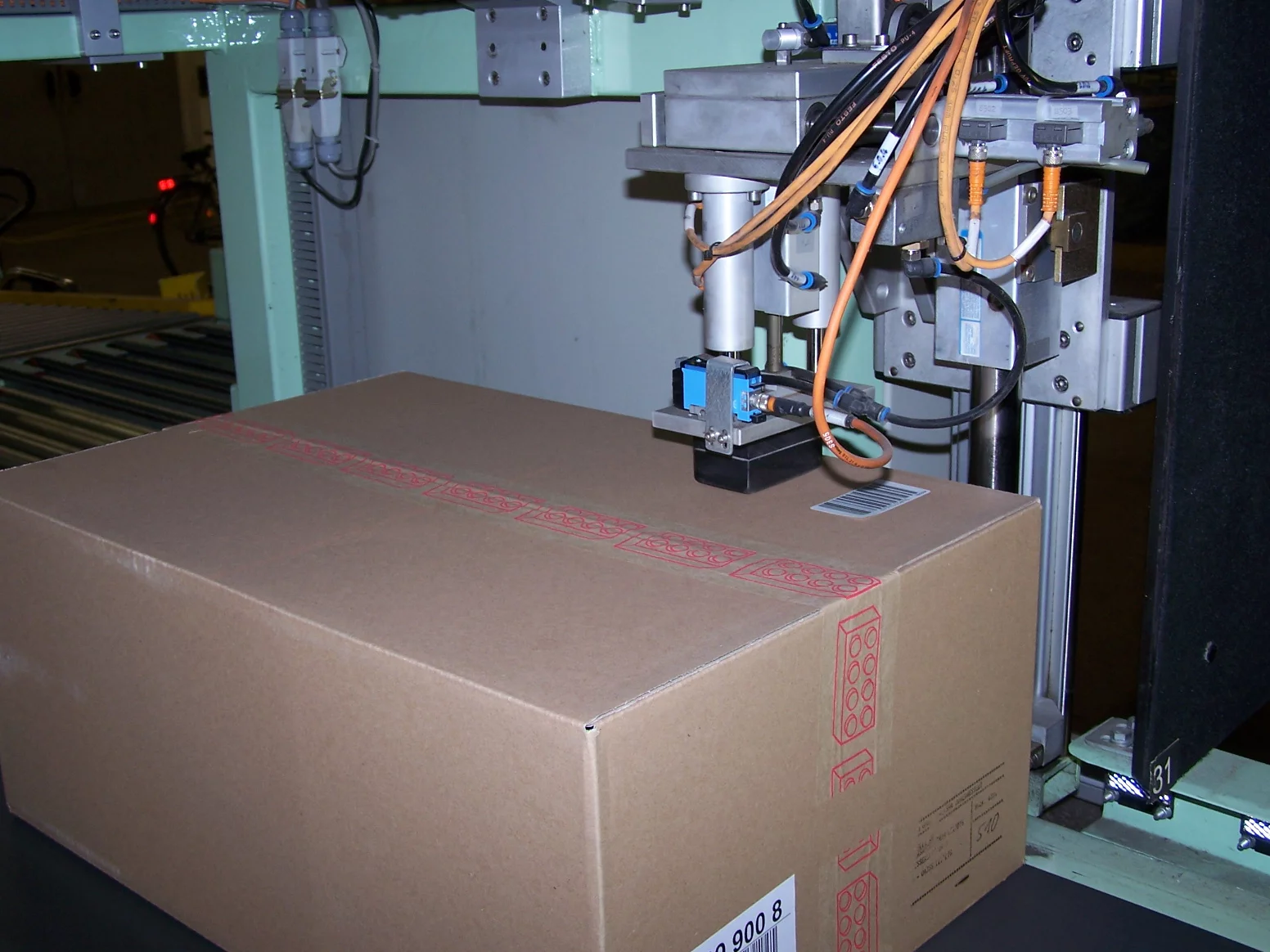
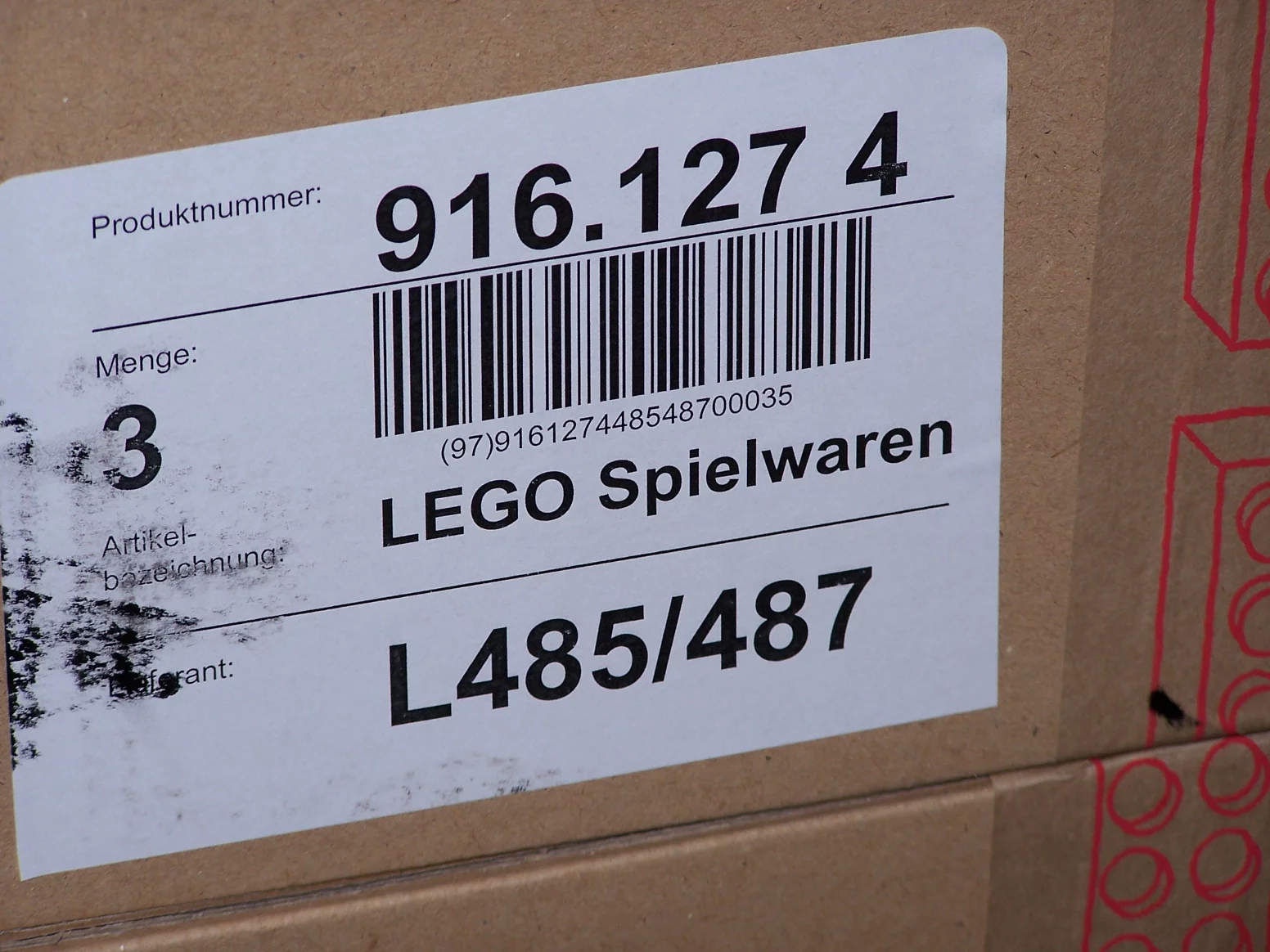
With their arrival, every item must first be registered and then transported by conveyors to racks that are used to hoard more than 2 Millions of packages as a buffer pool. If packages are not registered properly, they may become lost inside the warehouse. Because of this, every package must be reliably marked by a label specified by Quelle. This label should not exceed 135 x 90 mm and must display a 7-digit product number, a 4-digit quantity description, and a 6-digit vendor number in Helvetica or Arial printed in black with a minimum font size of 12 mm. An EAN 128 bar code stores these parameters (Figure 1).

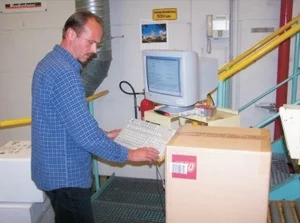
After packages are delivered, each package is measured, weighed and given another internal bar code label called a KID (Karton Identification Number). This KID, a consecutive number, is attached to the package during processing (Fig. 2).

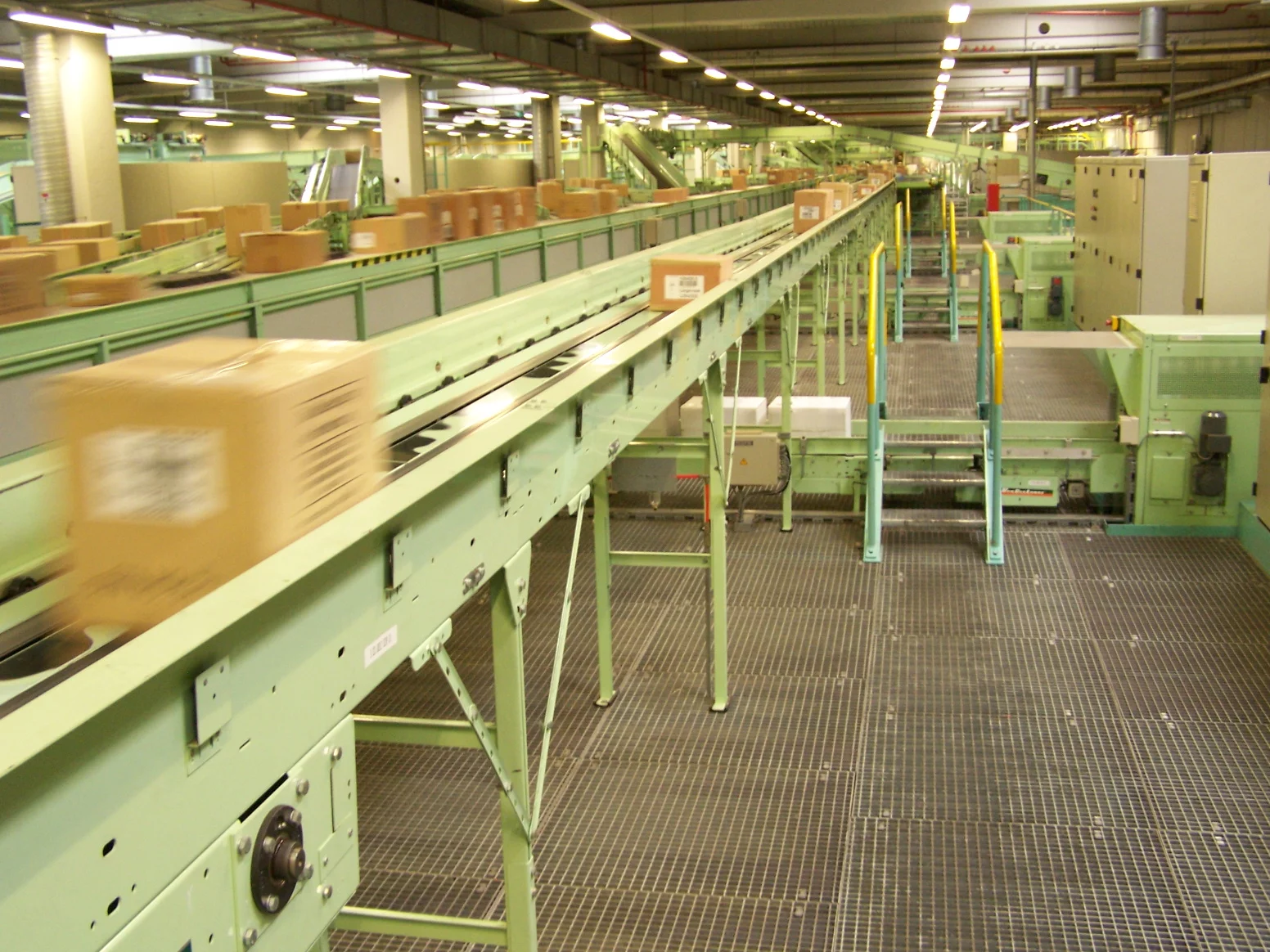
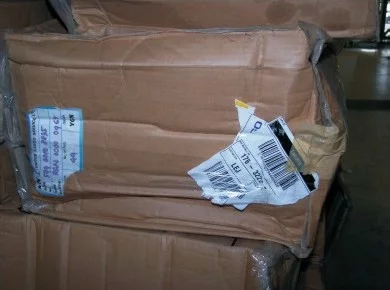
All specific parameters and the relative whereabouts of a package - registered by different bar code scanners during its conveyor belt transportation (Fig. 3) – are linked to the KID by a Siemens S5 SPC. Because of the large number of packages delivered, it is impossible to perform these tasks manually. And, while most vendors adhere to the label guidelines, some packages do not have any labels, use the incorrect font, or are labeled by hand. Other labels are squashed, crumpled, or difficult to read (Fig. 4). This leads to difficulties during bar code and OCR reading, making package identification by machine vision impossible in every case.
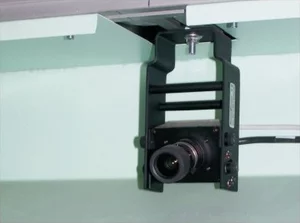
After packages arrive, they are measured by a laser scanning system, weighed and given another bar-code label called a KID that is used to specify the parameters of the package.

After providing each package with a KID bar code, the vendor's EAN 128 code is read by a bar code reader located above the conveyor belt. In operation, 75% of all packages can be read in this manner. To automate the reading of the remaining packages, a machine vision system increases the identification rate of the 25% unreadable labels. Normally, one-dimension bar codes like the KID can be read without problems. However, sophisticated OCR needs complex machine vision technologies.

To configure the machine vision system on the 18 parallel conveyors located at the warehouse's entrance, a network of intelligent i-Cam 108 cameras from Baumer Optronic (Radeberg, Germany) was used. Each Baumer i-Cam 108 provides powerful FPGA supported software and assures local real time stability. This architecture guarantees the calculation power for label detection and subsequent high resolution OCR reading inside gray-value-images respectively. After the label is located, a region of interest (ROI) inside the label is searched for fonts or codes. If the result from the bar code reading of the EAN 128 vendor label and the result of the OCR are identical, the task is complete and the package is classified as identified.

No structural measures are required for easy installation. Overall flexibility is provided via higher-level software, accessible inside the TCPIP network on one single PC. The overall reading performance is limited by the poor quality of several specimens. This includes damage during transport, destructed labels or labels with not specified fonts and multiple labels due to improper handling. In order to overcome this limitations, subsequent software packages are used parallel. Each software's result is estimated for maximum probability inside a so-called voting algorithm. This process is possible on a simple PC, because the i-Cam already provided the proper label position, thus reducing the calculation time to a non-critical amount.
Here HALCON from MVTec Software GmbH (Munich, Germany) plays the important role as powerful and flexible high level co-processing Software: The results from both OCR software threads running on the PC are then compared with the OCR result of the i-Cam. If at least two results of the three OCR measurements match, the job is complete. If not, the package is re-routed to another conveyor where manual operators read the label and apply the correct bar codes). Ten years ago, at the Quelle logistic center every package was registered by this so-called Videocodierung (VCO; video encoding system) without bar code reading or machine vision applications (Fig. 6).

According to Kerstin Mehlhose, plant engineer at Quelle, using the i-Cam OCR with HALCON's OCR software on the PC significantly increased the degree of automation to the desired amount.

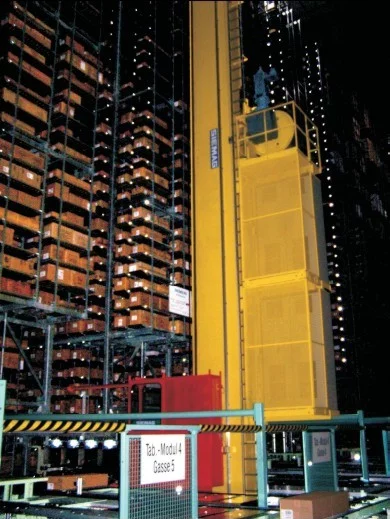
Finally, the package is shifted onto a metal tray (Fig. 7) that again has its own bar code at its underside, the so-called TID. This Tablar Identification Number is linked to the KID before the tray leaves the belt to be stacked. From this point, only the TID is used to find packages using a warehouse management system from Siemens. Instructed by the warehouse management system, a giant rail-bound lift vehicle carries the trays into the racks where they are stored (Fig. 8). This warehouse management system also removes the tray with the requested packages when the goods need to be shipped, a process that is dictated by customer orders placed by mail order, the telephone or over the Internet.

Authors: Dr. Lutz Kreutzer and Dr. Ralf Grieser Information kindly provided by Quelle GmbH and Baumer Optronic GmbH.

All product names, trademarks and images of the products/trademarks are copyright by their holders. All rights reserved.
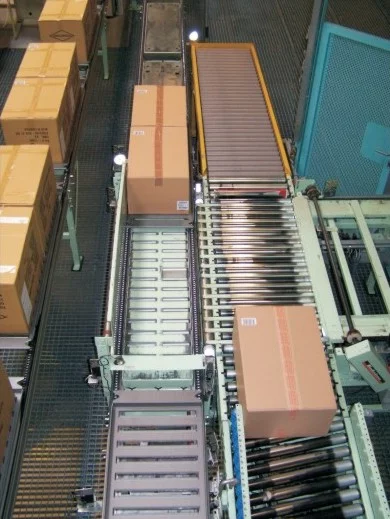
Packages transferred onto a metal tray carrying a TID barcode for warehouse identification.
Fig. 7: Packages are shifted onto a metal tray that again has its own bar code (TID).
Automated high-bay warehouse system storing packages identified by barcode.
Fig. 8: The storing into racks

Published on: August 13, 2013

Weitere Stories

MVTec HALCON product icon
Projektion der von einer Kamera erkannten Pupillenkoordinaten auf das Bild einer zweiten Kamera zur exakten Bestimmung der Glasposition.
Image Processing Automates Eyeglass Fitting for Rodenstock
Imagine that you wear varifocal glasses and need new ones. You go to an optometrist and, without time-consuming adaptations, measuring or trying on frame after frame, you look at yourself in a mirror and - voila! - your chosen frame is on your nose.
Show full Story
HALCON
Glass, Metal, Paper, Foil & Printing
Classification
Matching
Measuring
MVTec HALCON product icon
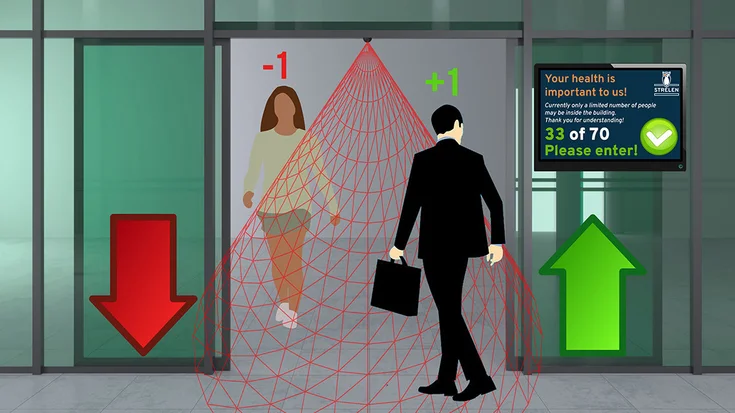
Visualisierung eines People-Counting-Systems am Gebäudeeingang mit 3D-Erfassungsbereich, Ein- und Ausgangsmarkierungen sowie Anzeige zur aktuellen Personenzahl zur sicheren Zutrittskontrolle.
Simple and reliable control of the number of persons within a building with MVTec HALCON
Strelen Control Systems GmbH is a Certified Integration Partner of MVTec with seat in Büttelborn, close to Darmstadt, Germany. The solutions developed by Strelen are suitable for the inspection and analysis as well as for the automation and regulatio…
Show full Story
HALCON
Security & Surveillance
Blob Analysis
Morphology
MVTec HALCON product icon
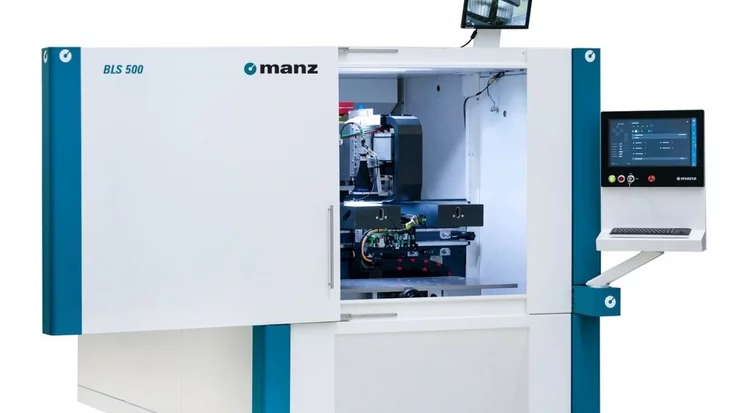
Battery laser welding system used in automated battery production with integrated machine vision inspection.
Full quality control with HALCON´s deep learning functions
One of the key challenges in automated battery production is achieving stable welds without damaging the housing. To meet strict automotive quality standards while reducing costs, Manz AG is developing inline inspection systems that enable full proce…
Show full Story
HALCON
Battery Production
Electric Components
Machinery
Anomaly Detection
Deep Learning
Inspection
MVTec HALCON product icon
Camera test chart with line patterns and a Siemens star used for measuring resolution, contrast, and optical performance.
DCTau: A photographer's tool for testing digital cameras based on HALCON
DCTau by Anders Uschold, Munich, provides a standardized test for evaluating digital cameras with minimal operator input. Designed for both beginners and professionals, it measures resolution, contrast, noise, sharpening, distortion, and brightness l…
Show full Story
HALCON
Education, Research & Science
Measuring
MVTec HALCON product icon
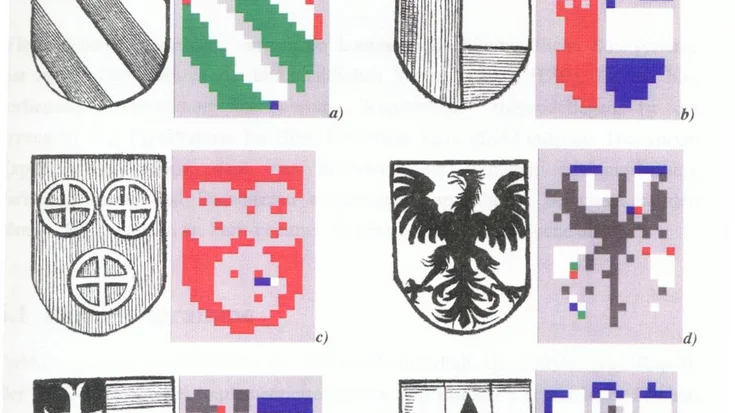
HERON - Middleware for Image Retrieval Using Graphical Features Extracted by HALCON
The interdisciplinary HERON project aims to find images in digital libraries or large archives without detailed domain knowledge. Initially applied to heraldry, the methods can also be used in medical imaging or trademark collections. HERON uses inno…
Show full Story
HALCON
Education, Research & Science
Classification
Filtering
Matching
MVTec HALCON product icon
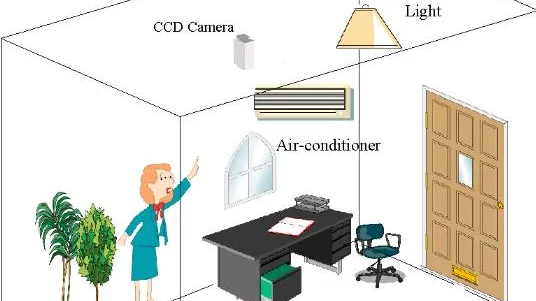
Support of Intelligent Rooms by Image Processing
In recent years, rooms with intelligence are studied. This kind of rooms is becoming important not only for medical or welfare use, but also at offices or ordinary houses. Obviously, the man-machine interface to communicate human intention is a subst…
Show full Story
HALCON
Education, Research & Science
Classification
Filtering
MVTec HALCON product icon
Machine Vision Solves "Needle-in-a-haystack" Problem for Small Parts Manufacturer, Developed by Data Systems
Data Systems solves the “needle-in-a-haystack” challenge for a small parts manufacturer using HALCON-based machine vision. The system automatically inspects, sorts, and classifies over 300,000 part variations, checking size, type, coating, and laser…
Show full Story
HALCON
Machinery
Packaging & Logistics
Matching
OCR
MVTec HALCON product icon
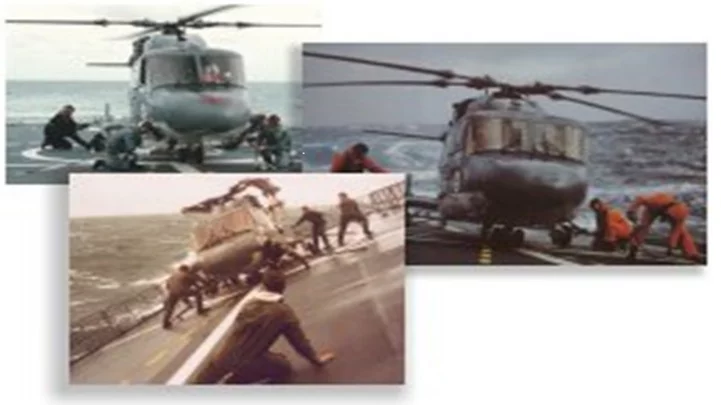
Manual handling of a helicopter on a ship deck under rough sea conditions.
Automatic Helicopter Handling System from FHS Förder- und Hebesysteme GmbH
FHS Förder- und Hebesysteme GmbH is a leading supplier of defense technology and naval technology. The company has a long experience and competences in development and production of systems and machines with electrical hydraulical drives and control…
Show full Story
HALCON
Robotics
Calibration
Measuring
MVTec HALCON product icon
The Presetter and Measuring Machine SATURN from Zoller – Measurement of Tools with HALCON
The ZOLLER SATURN measuring machine employs HALCON for precise tool measurement in the micrometer range. Subpixel algorithms automatically extract geometric properties from the tool shape. Camera calibration ensures consistent precision across the en…
Show full Story
HALCON
Machinery
Calibration
Measuring
MVTec HALCON product icon
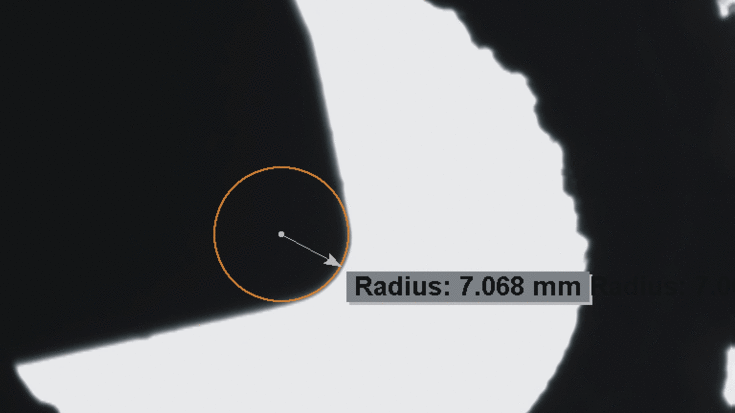
Machine vision measurement of the cutting edge radius and angle of an indexable insert using subpixel accuracy.
Machine Vision on Assembly Line: the Roboworker Super Robot Feeder
Since more than 15 years, ROBOWORKER Automation GmbH (Weingarten, Germany) is specialized in developing and producing systems for automatic handling, assembly and checking of workpieces as well as robot-aided loading and unloading of production machi…
Show full Story
Robotics
Machinery
Packaging & Logistics
Classification
Matching
Measuring
MVTec Software