MVTEC HALCON

Novel gripper uses machine vision to automate packing - Helmut-Schmidt-University Hamburg

Combining a sophisticated gripping mechanism with machine vision allows packing systems to handle disparate objects.
HALCON
Robotics
Packaging & Logistics
3D Calibration
3D Vision
Matching

Pick-and-place robots have been used for a number of years in such diverse applications as PCB manufacturing and food packaging. In most of these systems, the size, shape, and surface characteristics of the objects to be handled are well-known. Because of this, system developers can choose from a range of robotic grippers specifically designed to handle individual products.

In many cases, however, the irregular nature of objects such as light bulbs, bottles, glassware, linen, and books necessitates the development of specialized handling equipment. To alleviate the need for such development costs, the Helmut-Schmidt-University (Hamburg, Germany) has developed a specialized gripper. By combining this gripper with off-the-shelf machine vision cameras and software, the team has built an automated packaging system for pick and place.

Today, many automation setups use 3-D laser sensors to perform object measurement. In these systems, the geometric dimensions of objects are compared with a 3-D CAD model to allow pick-and-place systems to accurately predict their location and position.However, where flexible packages such as bags or sacks need to be handled, more specialized picking systems that incorporate sophisticated handling mechanisms coupled with robotic vision systems need to be deployed.

In the design of the flexible gripper, a double-walled hose is filled with a fluid material such as water or air. This hose is glued into a cylindrical ferrule which forms the outer part of the gripper and allows the gripper to pick objects (see Fig. 1).

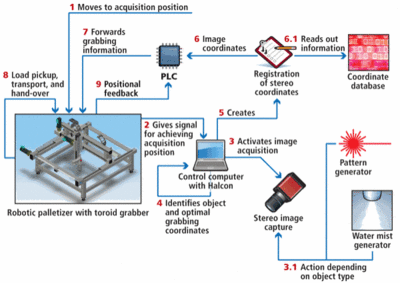
Before the flexible gripper can be used to pick an object, its location and position must be measured. To detect objects, the system developed at the Helmut-Schmidt-University uses non-contact stereo measurement that is first used to create an elevation profile of the object and then segment single objects.
Elevation profiles

By mounting the cameras from MaxxVision (Stuttgart, Germany) 200 mm apart, images from the cameras overlap, allowing an object's elevation distance to be calculated by a binocular stereo operator included in the HALCON image processing library from MVTec (see Fig. 2). To calibrate the cameras and the four stereo pairs, twenty-one different positions of a calibration plate were imaged and evaluated by HALCON's camera calibration algorithms.

To calculate the elevation distance, a gray value correlation analysis is performed for each of the four stereo pairs. Because the pixel distance, the camera distance, and the distance between cameras are known, a matrix elevation profile of gray values can be calculated geometrically.

Objects with low-contrast surfaces constitute a particular challenge caused by the absence of distinctive points. To overcome this, a Flexpoint laser pattern generator module from Laser Components (Olching, Germany) was used to project a laser dot matrix onto the surface with a dot distance of approximately 5 mm.

To avoid reflections and to detect transparent packing materials, an ultrasonic nebulizer from Hirtz & Co. (Cologne, Germany) sprays the package with a nondestructive thin water fumes.

Image segmentation

To perform image segmentation, objects with known surfaces are compared using correspondence analysis with template models. To segment unknown objects, edge-based and region-based segmentations are used. Edge-based methods detect edges by using gray scale correlation inside the elevation profile.

While such methods are fast, they often result in generating incomplete edges. More computationally intensive region-based methods subdivide the elevation profile into homogeneous areas of the same height or same surface gradient.

Using these segmentation techniques, known and unknown objects can be identified. If, for example, such segmentation results in a known pattern, then the object can be properly identified. To identify unknown objects, their geometric parameters and color information is used. These characteristic data are fed to the input layer of a neural network, also implemented using HALCON, which relates the object to an object class. With every object, the neural network is trained again resulting in an increasing classification quality.

After identification, the known height and position of each object are transferred to the robotic palletizer for picking. By incorporating the flexible grabber on thigh x-y-z stage, the vision-based robotic system can be used to pick and place a number of disparate objects.

Authors: Rainer Bruns, Björn Cleves, and Dr. Lutz Kreutzer, MVTec Software GmbH

Article kindly provided by Vision Systems Design. All product names, trademarks and images of the products/trademarks are copyright by their holders. All rights reserved.

Published on: August 26, 2013

Weitere Stories

MVTec HALCON product icon
Projektion der von einer Kamera erkannten Pupillenkoordinaten auf das Bild einer zweiten Kamera zur exakten Bestimmung der Glasposition.
Image Processing Automates Eyeglass Fitting for Rodenstock
Imagine that you wear varifocal glasses and need new ones. You go to an optometrist and, without time-consuming adaptations, measuring or trying on frame after frame, you look at yourself in a mirror and - voila! - your chosen frame is on your nose.
Show full Story
HALCON
Glass, Metal, Paper, Foil & Printing
Classification
Matching
Measuring
MVTec HALCON product icon
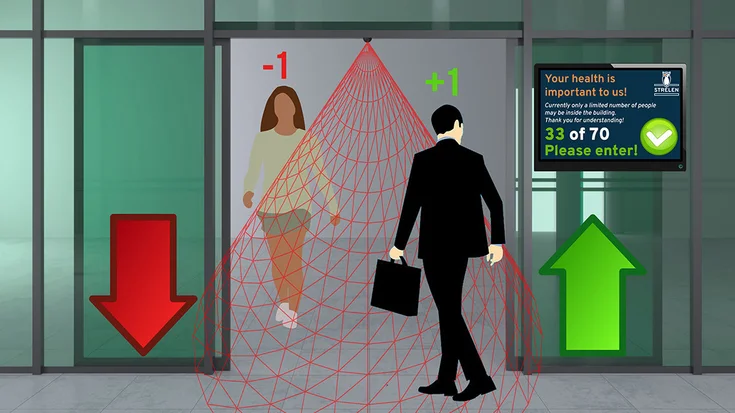
Visualisierung eines People-Counting-Systems am Gebäudeeingang mit 3D-Erfassungsbereich, Ein- und Ausgangsmarkierungen sowie Anzeige zur aktuellen Personenzahl zur sicheren Zutrittskontrolle.
Simple and reliable control of the number of persons within a building with MVTec HALCON
Strelen Control Systems GmbH is a Certified Integration Partner of MVTec with seat in Büttelborn, close to Darmstadt, Germany. The solutions developed by Strelen are suitable for the inspection and analysis as well as for the automation and regulatio…
Show full Story
HALCON
Security & Surveillance
Blob Analysis
Morphology
MVTec HALCON product icon
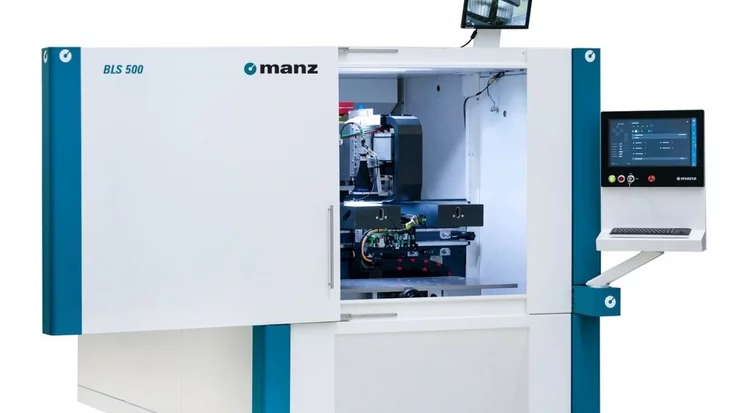
Battery laser welding system used in automated battery production with integrated machine vision inspection.
Full quality control with HALCON´s deep learning functions
One of the key challenges in automated battery production is achieving stable welds without damaging the housing. To meet strict automotive quality standards while reducing costs, Manz AG is developing inline inspection systems that enable full proce…
Show full Story
HALCON
Battery Production
Electric Components
Machinery
Anomaly Detection
Deep Learning
Inspection
MVTec HALCON product icon
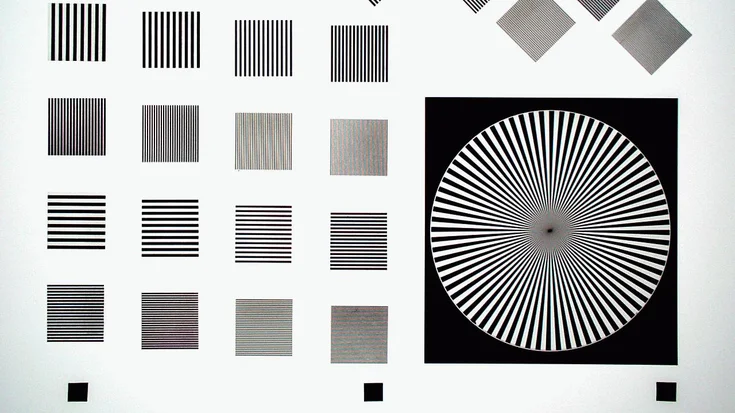
Camera test chart with line patterns and a Siemens star used for measuring resolution, contrast, and optical performance.
DCTau: A photographer's tool for testing digital cameras based on HALCON
DCTau by Anders Uschold, Munich, provides a standardized test for evaluating digital cameras with minimal operator input. Designed for both beginners and professionals, it measures resolution, contrast, noise, sharpening, distortion, and brightness l…
Show full Story
HALCON
Education, Research & Science
Measuring
MVTec HALCON product icon
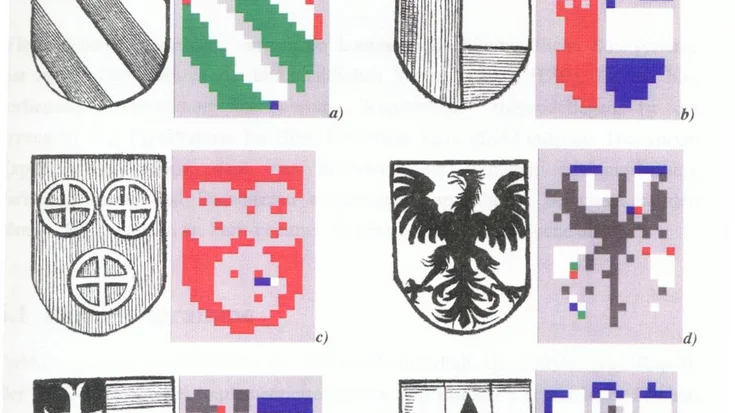
HERON - Middleware for Image Retrieval Using Graphical Features Extracted by HALCON
The interdisciplinary HERON project aims to find images in digital libraries or large archives without detailed domain knowledge. Initially applied to heraldry, the methods can also be used in medical imaging or trademark collections. HERON uses inno…
Show full Story
HALCON
Education, Research & Science
Classification
Filtering
Matching
MVTec HALCON product icon
Support of Intelligent Rooms by Image Processing
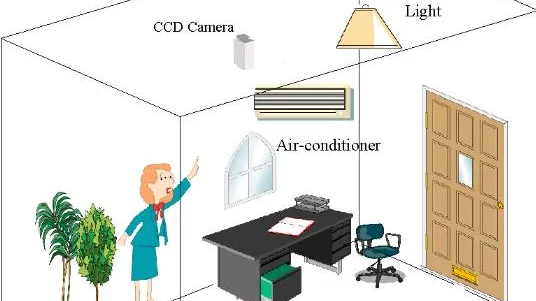
In recent years, rooms with intelligence are studied. This kind of rooms is becoming important not only for medical or welfare use, but also at offices or ordinary houses. Obviously, the man-machine interface to communicate human intention is a subst…
Show full Story
HALCON
Education, Research & Science
Classification
Filtering
MVTec HALCON product icon
Machine Vision Solves "Needle-in-a-haystack" Problem for Small Parts Manufacturer, Developed by Data Systems
Data Systems solves the “needle-in-a-haystack” challenge for a small parts manufacturer using HALCON-based machine vision. The system automatically inspects, sorts, and classifies over 300,000 part variations, checking size, type, coating, and laser…
Show full Story
HALCON
Machinery
Packaging & Logistics
Matching
OCR
MVTec HALCON product icon
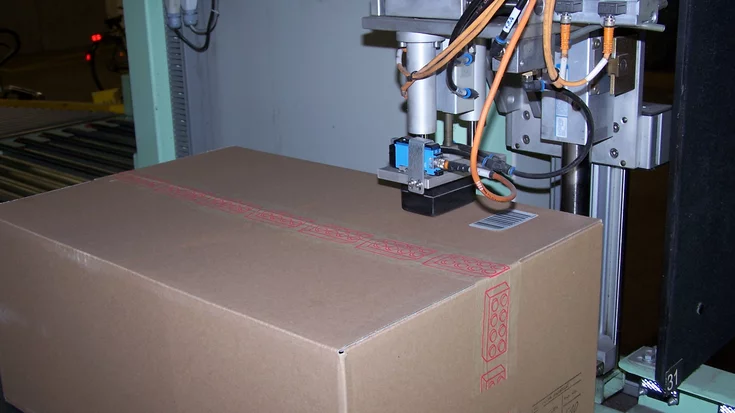
Package label with barcode and printed text used for automated barcode reading and OCR.
Machine Vision Speeds Package Bar Code Reading at Quelle GmbH
At Quelle GmbH's logistics center in Leipzig, 80,000 packages are processed daily. To enhance efficiency, the company employs a combined machine vision system with barcode reading and OCR. Utilizing Baumer i-Cam 108 cameras and MVTec's HALCON softwar…
Show full Story
HALCON
Machinery
Packaging & Logistics
Bar Code & 2D Code Reading
OCR
MVTec HALCON product icon
Manual handling of a helicopter on a ship deck under rough sea conditions.
Automatic Helicopter Handling System from FHS Förder- und Hebesysteme GmbH
FHS Förder- und Hebesysteme GmbH is a leading supplier of defense technology and naval technology. The company has a long experience and competences in development and production of systems and machines with electrical hydraulical drives and control…
Show full Story
HALCON
Robotics
Calibration
Measuring
MVTec HALCON product icon
The Presetter and Measuring Machine SATURN from Zoller – Measurement of Tools with HALCON
The ZOLLER SATURN measuring machine employs HALCON for precise tool measurement in the micrometer range. Subpixel algorithms automatically extract geometric properties from the tool shape. Camera calibration ensures consistent precision across the en…
Show full Story
HALCON
Machinery
Calibration
Measuring
MVTec Software