Success Story
Machine vision, also known as industrial image processing, inspects parts, reads text and codes, and can control robot movements. In highly variant low-volume assembly, however, employees remain essential. Endress+Hauser Flow in Reinach, Switzerland, uses the technology in a digital assistance system for manual assembly. “Our goal is to be technologically leading, to leverage innovations, and to actively drive them forward. This applies not only to our products, but also to our assembly processes,” explains Julius Krause from Industrial Engineering at Endress+Hauser. Krause supports global production sites in the design, procurement, and commissioning of camera-based inspection systems as well as digital assistance systems.
MERLIC is integrated into the company’s web-based Manufacturing Execution System (MES). Among other things, the MES checks whether the device is at the correct process step, whether the workstation is suitable for that step, and whether the logged-in user is authorized to perform the process. After approval, the MES displays work instructions as images and texts. MERLIC starts in the background with the relevant recipe data and parameters, confirms correct execution of each process step, and reports the completed step back to the MES.
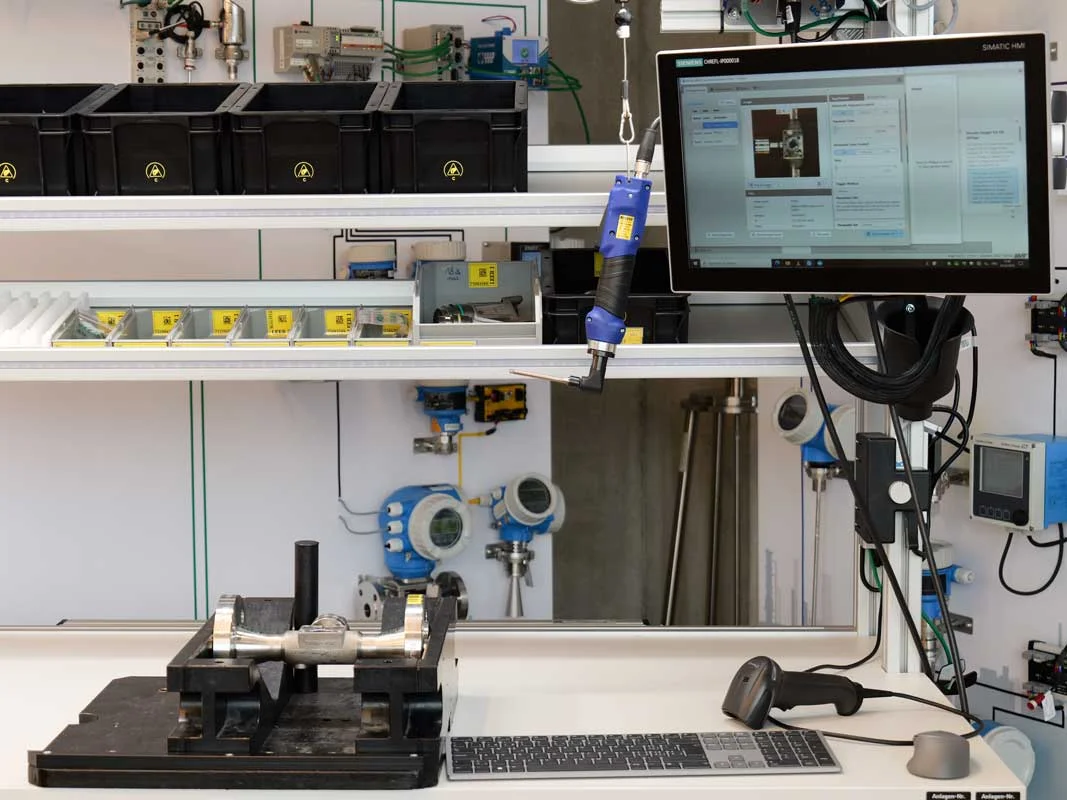
Before the conversion to machine vision, quality assurance usually relied on double checks by two employees and additional tests. “The goals of further development were to relieve production staff, provide optimal support, and ensure the highest level of product quality. In addition, in-process inspection allows errors to be corrected easily and prevents failures in subsequent process steps or end-of-line tests,” explains Krause.
Assembly assistance systems available on the market did not meet Endress+Hauser’s requirements, partly because many are cloud-based. Extensive MES integration and third-party hardware would have added complexity. The most efficient option was standard machine vision software. “Machine vision enables fast, contactless testing in real time,” Krause says. “Our production control system already has numerous interfaces that we could use to integrate machine vision software, allowing it to run on hardware managed by us.” Endress+Hauser selected MVTec MERLIC, a no-code software for creating complete machine vision applications without programming knowledge. The software also includes AI- resp. deep-learning-based tools for machine vision tasks.
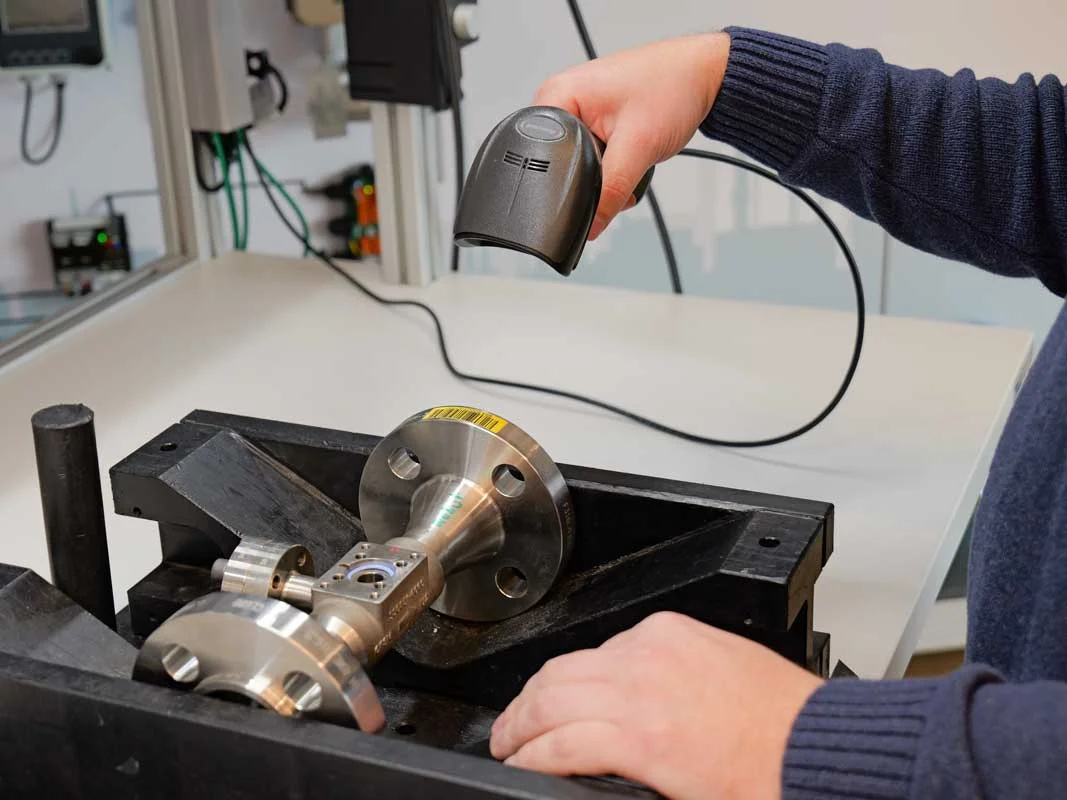
The assembly workstation consists of a height-adjustable table made of Bosch profiles with storage compartments. A camera on the upper rail accompanies the employee during assembly. The components are typically flowmeters nearing completion. First, the code that accompanies the component is read. A screen then displays messages and images showing how the component must be assembled and which details require attention.
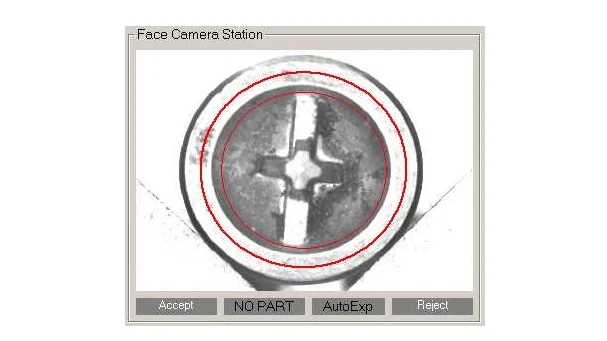
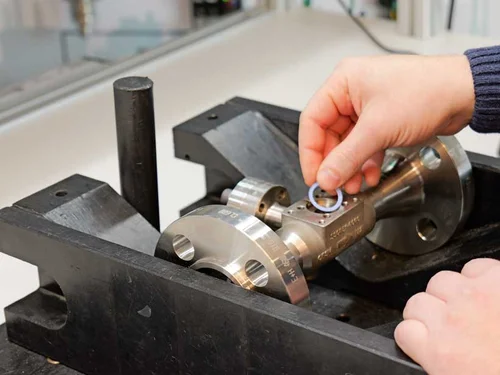
MERLIC supports automated quality control by detecting, for example, whether seals have been installed. The correct execution of critical process steps is reported to the MES, and the device is released for the next step.
“We chose MERLIC for a number of reasons. The most important is that, as a standard software, it serves as a tool we can use for various tasks. As a result, we do not have to train our employees on different types of software. Finally, process integration is straightforward. MERLIC’s numerous open interfaces – such as GenICam – give users great flexibility regarding compatible hardware and make software integration simple,” explains Julius Krause.
At the workstation, MERLIC is embedded in a streamlined machine vision setup with an industrial PC, a laser distance sensor, and a liquid-lens camera for variable focus. As machine vision software, MERLIC processes and evaluates the captured images. Barcode scanners are used to scan the codes on the components. The information behind these codes includes how the present component with a batch size of 1 must be assembled step by step and what needs to be considered. To ensure an efficient workflow, the camera and MERLIC are running in the background, automatically recognizing and confirming correct execution so that the user interface advances to the next step.
MERLIC uses two AI-based image processing technologies for recognition and confirmation: semantic segmentation and object detection. Semantic segmentation localizes error classes with pixel precision. Object detection locates object classes and identifies them using bounding boxes. “The application at Endress+Hauser clearly demonstrates how machine vision can easily help customers digitize their production while increasing quality,” explains Ulf Schulmeyer, Product Manager for MERLIC at MVTec. “As a no-code software, MERLIC is ideally suited to work hand in hand with employees.”
Since quality control with MERLIC met the requirements, Endress+Hauser is moving to the next stage of expansion. MERLIC will take on additional tasks. The goal is for the machine vision software to independently read codes on components using barcode reading and OCR (optical character recognition) and retrieve the stored digital information. The employee will only need to hold the workpiece under the camera so the code can be read, and the workpiece can later be inspected during the process.
Endress+Hauser places great importance on using the latest techniques and technologies in assembly and applies a structured approach to developing, testing, validating, and rolling out new manufacturing processes worldwide. The first three steps take place at the company’s headquarters in Reinach, including for the machine-vision-assisted assembly process. “We have been using MERLIC since March 2025. The software proved to be stable and reliable. That is why we began rolling out this process to our other global sites in fall 2025,” says Krause.
For seamless integration into the assembly process, Endress+Hauser worked with MVTec’s customer support team. “We had some feature requests to optimize the system. For example, the MVTec team optimized the export of AI models to the target hardware and developed a communicator plugin that sends images directly to our central servers,” Krause concludes.