Success Story

Deep learning detects defects in the food industry

Automation specialist INNDEO has developed a sophisticated automation solution for quality control in the packaging industry. Thanks to machine vision and deep learning technologies, high speeds and defect detection rates are no longer a problem.
HALCON
Food & Beverage
Deep Learning
OCR

The Spanish company INNDEO specializes in the automation of quality inspections and offers high-quality machine vision solutions for the food industry with its INSPECTRA brand. INNDEO has developed the Thermoseal & Label Inspector solution to reliably inspect packaging and read labels. The device combines a wide range of sophisticated technologies such as high-speed and processing capture, hyperspectral vision, deep learning, and high-performance RGB.

Fully automated inspection for the packaging industry

The advantages of a fully automated solution based on machine vision are higher detection rates of packaging defects, cost savings, as well as the comprehensive digitalization of production processes to monitor and improve them. As inspection processes are often still carried out manually in practice, and therefore defective products reach the end customer, the goal of an automated solution must be to reliably detect all conceivable defects in packaging. 100 percent automation of quality control reduces costs on the one hand and introduces objective criteria for sorting the objects to be inspected on the other. In addition, quality and production data can be continuously digitized end-to-end and the corresponding indicators displayed in real time.

Although there are solutions for inspections using machine vision, these are often not robust enough, have too low detection rates, or are difficult to adapt to changes in the production lines. INNDEO precisely addresses these weaknesses with its machine vision solution. The goal was to identify quality defects in food packaging at a high production rate of up to two packs per second to enable inline rejection with processing times of just a few milliseconds per image. It was therefore essential to automate the application end-to-end using machine vision.

MVTec HALCON software with deep learning technologies for defect detection

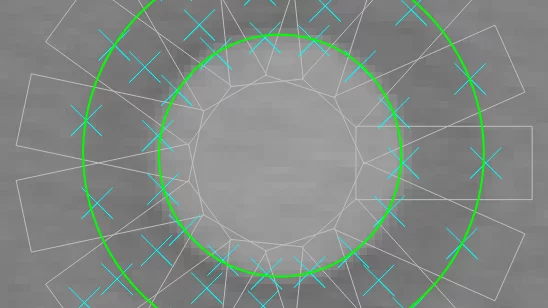
Within the setup of the Thermoseal & Label Inspector, cameras take images of the objects to be inspected at various points within the production environment. The images are processed by the integrated machine vision software MVTec HALCON. HALCON uses various parameters to determine the relevant inspection area (region of interest / ROI) of the image. To do this, INNDEO uses high-resolution RGB vision technology to find the simplest sealed area defects, such as a piece of ham, as its color is easily distinguishable in a transparent tray. In addition, the company uses hyperspectral vision technology to detect more complex defects, such as defects in opaque or printed trays.

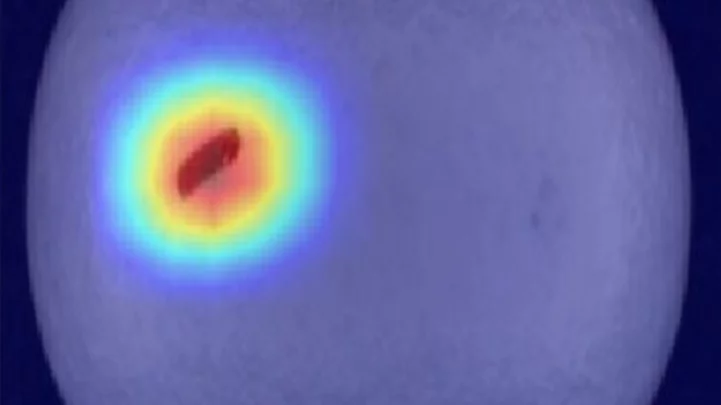
Deep learning is also used to detect certain defects and is able to interpret images with a higher recognition speed and efficiency than the human eye ever could. The system is able to learn during a training phase without the need for additional programming by the user. This technology allows the detection of wrinkles in sealing films, faults in the arrangement of the product in the tray, and the detection of quality defects that cannot be distinguished by standard machine vision algorithms.

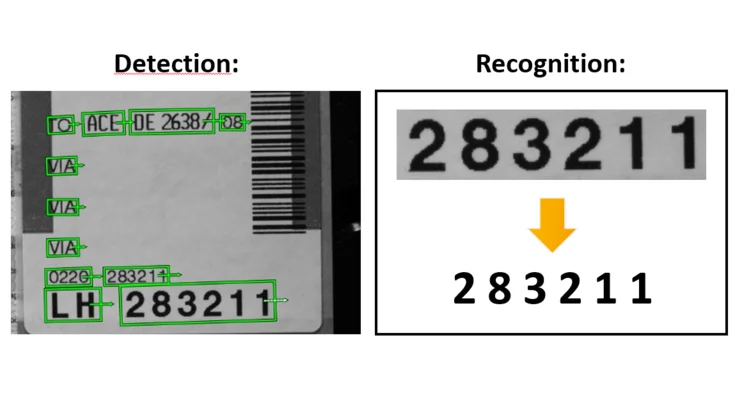
Another application scenario for machine vision is the inspection of labeling and checking whether wrinkles have formed underneath the label. To detect the label, a corresponding configurable tool looks for a specific pattern. Once this is located, the inspection processes take place. The application uses the optical character recognition technologies integrated in HALCON, such as OCR (Optical Character Recognition) or Deep OCR, which combine text recognition functions with intelligent deep learning algorithms. Deep learning technologies and pattern matching of color tones are also used to detect anomalies in the applied labeling.

Software offers flexibility in interface integration

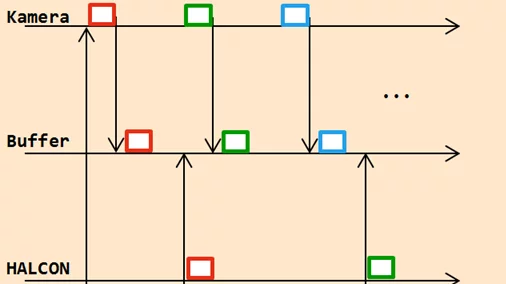
For the end customer, it is important that the inspection solution can be seamlessly integrated into the existing process environment. This allows the user, for example, to control the inspection system in their familiar environment. Interface integration proved to be one of the biggest challenges during implementation, as the various inspection parameters can be configured from a different system control and all images from the various cameras have to be analyzed in a very short time. This means that the machine vision software only has a very short time to decide whether packaging is faulty and needs to be rejected. The integration of the solution was simplified by the possibilities of MVTec HALCON. "The software offers various interfaces for many types of industrial cameras and the possibility to directly run scripts within a real application using the HDevEngine and debug it. We see the wide variety of image processing algorithms, convenient programming, and seamless integration with our software as further strengths of MVTec products," confirms Emilio de la Red Bellvis, Chief Innovation Officer at INNDEO.

On the hardware side, the application setup includes various components, such as several industrial PCs. These receive the images from the individual cameras and communicate with programmable logic controllers (PLCs). INNDEO was confronted with a further challenge. Due to the shortage of electronic components, flexible programming had to be developed. This accommodates different camera types, processing architectures, and graphics processors so that the hardware can vary depending on availability.

Quality control solution wins award

As a result, INSPECTRA achieved 100 percent of the project objectives with its Thermoseal Inspector solution and the integrated HALCON machine vision software. The quality defects in both the packaging and the product itself are thus avoided. This eliminates the cost of destroying, replacing, and transporting defective products. In addition, producers can guarantee their brand promise to consumers at all times thanks to the reliable and consistent quality. The biggest advantage, however, is that quality control can be automated throughout the entire production process. This reduces the labor costs associated with quality assurance, lowers the error rate, and eliminates subjectivity in the inspection criteria. Finally, the technology can detect errors that would remain hidden to the human eye.

The quality of the solution not only impresses customers: At the Meat Attraction 2022 trade fair, the Thermoseal Inspector even received an award as the most innovative technology for the ancillary industries of the meat industry.
Further articles

Visualize Object Model 3D
Improve your surface-based matching with two helpful features
Do you sometimes have objects, which have rather small symmetry-breaking elements (such as small boreholes on an object)? Does your surface-based 3D matching not find the correct orientation?
Read more
Developers Corner
Deep OCR Interface
Deep OCR recognition training – the next level
HALCON’s Deep OCR is very powerful and can detect and recognize text in various industrial scenes. However, what if you have a special font, or want to read foreign characters? With HALCON 22.05 it is possible to train the recognition model to read s…
Read more
Developers Corner
Fitted primitives distance threshold
Metrology Model – Quality of Fit
"For most applications, the standard parameter values are sufficient." This sentence is often read in the HALCON Solution Guide. But what if the results do not meet your expectations? The Metrology Model allows lightning-fast measurement of geometric…
Read more
Developers Corner
Review of Acquisition Modes
This article gives an overview of HALCON’s image acquisition modes, explaining how continuous, triggered, and synchronous acquisition work, and clarifying common misconceptions for practical applications.
Read more
Developers Corner
Deep OCR – Tips and Tricks
Have you already experienced the performance boost by using Deep OCR compared to the classical rule‑based approaches? In this article, we’ll show you practical tips and tricks to further improve your Deep OCR results.
Read more
Developers Corner
Easy text and code reading with MERLIC standard tools
If you want to build an MVApp that reads for example QR codes or bar codes you can do so with just a few clicks. You can even combine the tools to get all available information printed on a product in different formats without the need for programmin…
Read more
Developers Corner
About MVTec's Heatmap
Imagine you intend to deliver a HALCON deep-learning-based classification application. And you are about to evaluate a trained model. You are therefore looking for feedback about this model, i.e. about its performances, biases, and other possible def…
Read more
Developers Corner
Gabor filter: What is it for?
Gabor filters, which are well known in the realm of time series analyses, can also be used in HALCON for 2D image analysis. They are particularly useful for detecting textures, patterns, and orientations in complex images.
Read more
Developers Corner
Introduction to new sub-pixel feature of bar code reader
Do you have small resolution bar codes to read but don't get any good results? Then please try our new feature – the subpixel bar code reader.
Read more
Developers Corner
Introduction to XYZ-Mappings (part 2)
This technical article continues our introduction to XYZ-mappings. In the last article, we answered the question "What are XYZ-mappings?" and gave a short preview towards "Why is using XYZ-mappings beneficial for many 3D applications?". Today, we wil…
Read more
Developers Corner
Introduction to XYZ-Mappings (part 1)
This technical article explores the benefits of XYZ-mappings in HALCON, showing how they increase speed, flexibility, and ease of use for many 3D applications.
Read more
Developers Corner
Deep learning: Why is the dataset key for a success result?
Deep learning success starts with the dataset: Learn why acquiring high-quality, well-labeled training data is crucial for reliable classification, detection, segmentation, and anomaly detection in your machine vision applications.
Read more
Developers Corner
How to prepare 3D height images for further processing with MERLIC’s standard tools
Learn how to prepare 3D height images in MERLIC for further processing: convert non-byte images to byte images to enable alignment, embossed text reading, and defect detection with standard easyTouch tools.
Read more
Developers Corner
Deflectrometry demo HALCON
Inspection of specular surfaces with deflectometry in HALCON
Inspect flat and curved reflective surfaces quickly and reliably with HALCON deflectometry: detect scratches, dents, and other defects with synchronized image acquisition and flexible image processing.
Read more
Developers Corner
Deep Learning classifier HALCON
Training a deep learning classifier with HALCON on the embedded board Jetson TX2
Learn how to train a deep learning classifier with HALCON on both a PC and an embedded Jetson TX2 board, from image acquisition to model training and inference, for efficient machine vision applications.
Read more
Developers Corner
Add touch input to the HSmartWindowControlWPF
Learn how to easily add touch input, including pinch-to-zoom, to the HSmartWindowControlWPF in HALCON, leveraging WPF’s built-in multi-touch events for intuitive image control.
Read more
Developers Corner
Increasing Speed in Deflectometry Set-ups
Discover three approaches to increase speed in deflectometry setups, from simple software-based synchronization to hardware triggers and FPGA-based real-time control, enabling faster and more precise inspection of reflective surfaces.
Read more
Developers Corner
HDevelop matching assistant speedup greediness
Speeding up shape-based matching with "Greediness"
Learn how the 'Greediness' parameter in shape-based matching balances speed and detection completeness, enabling faster searches while maintaining robust results in HALCON.
Read more
Developers Corner
Best practice for classification and OCR
Discover best practices for setting up classification and OCR in HALCON using the HDevelop OCR Training File Browser – quickly review, correct, and optimize your training data to improve segmentation and classification results.
Read more
Developers Corner
Rejection all classes 1.5
How to use rejection classes in MVTec HALCON
Learn how to handle outlier samples in MVTec HALCON by using rejection classes in MLP classifiers – automatically generate samples outside the training classes to improve classification reliability.
Read more
Developers Corner
MVTec Software