
Success Story

Machine Vision automates and optimizes battery inspection

A variety of defects can occur during battery production. Averna has developed a method for the automated inspection of batteries that reliably detects all conceivable defects. Here, the machine vision software MVTec HALCON plays a key role.
HALCON
Battery Production
Blob Analysis
Inspection

Battery manufacturers must meet very high-quality standards in their production processes. This applies to all types of batteries, whether for consumer electronics, electric vehicles, or other applications. Battery production is a very complex process. At the end of this process, there is a comprehensive testing workflow that takes place during the so-called forming and aging process. Here, the battery is not only tested for functionality, but also inspected for external defects such as deformations, indentations, or scratches. The defects that can occur here can vary greatly, both in shape and size. An enormous challenge is to precisely detect all these anomalies as part of the quality inspection. This is the only way to screen out defective batteries reliably before they leave the factory.

Optimizing battery inspection and reducing costs

The Canadian company Averna has designed, developed, and implemented a sophisticated solution for quality inspection on behalf of a well-known battery manufacturer to address this complex challenge. This solution can be used to identify a wide range of external product defects and locate them precisely. The aim of the project was to significantly improve battery inspection and thus quality, increase customer satisfaction, and reduce overall costs. “Speed was the top priority for this application because production processes must not be delayed by a time-consuming screening procedure,” says Roel Geraerts, Team Leader Vision at Averna, thus defining a key requirement. Further challenges were the varying shapes and sizes of the batteries, as well as the wide range of potential defects that can occur during battery production.

Pushing the pace of quality inspection

There was also another requirement: previously, the finished batteries were first labeled and only then inspected for defects as part of the quality inspection. This meant that production defects were often hidden by the label and therefore overlooked. Hence, also low-quality products could be delivered to customers. The new solution had to be capable of inspecting batteries very quickly and reliably detecting all conceivable damage. This had to take place before the labeling process to ensure that only fault-free products were labeled and released for shipment.

High-performance systems for lighting and machine vision were required

“Our best option for achieving the necessary speed and high level of automation for the inspection workflow was a professional machine vision solution,” explains Geraerts. Since the batteries are inspected from all sides in a 360-degree perspective, powerful technologies for lighting and handling were required. So, the specialists at Averna worked closely with the customer to design a sophisticated solution consisting of high-quality cameras and lighting systems mounted on a conveyor belt. Powerful light beams are directed onto the battery at optimal angles to make even the smallest discrepancies on the body visible during the battery inspection. By capturing a large number of images at a very high speed, the position of the test object can be quickly detected and electronically communicated. Several batteries can be seen in each image, so that the required inspection time can be reduced to a minimum by viewing them simultaneously. In this process, several cameras precisely capture every angle of the battery, generating almost 10,000 images per minute.

Highly precise image analysis with MVTec HALCON

The machine vision software MVTec HALCON is seamlessly integrated into Averna's own software and analyzes the images with the highest precision. The combinations of light and shadow and the resulting high contrasts in the image are evaluated using blob analysis. The technology extracts features from connected pixels that share the same logical state, such as color value (blobs). The decisive advantage is the very high processing speed. Within a very short time, the relevant area of the image (region of interest) and then possible anomalies are identified. The battery is then either rejected as defective or – if it is found to be in working order – passed on for labeling. Using a high-speed digital I/O system, the inspection results can be communicated to the control system and the parts automatically sorted, optimizing the quality inspection.

Machine vision ensures fast battery inspection

MVTec HALCON runs Averna's inspection software on a real-time engine, ensuring stable image data recording and evaluation. This makes it possible to automatically eject defective products in a timely manner, even at high speeds. With the help of MVTec HALCON, Averna developed an easy-to-use, customized system that includes fiducial markers. These allow the sharpness, brightness, positioning, and angle of the cameras to be measured exactly for a wide range of purposes, enabling the customer to easily and independently calibrate the system. Thanks to the fiducial markers, such control stations can also be set up identically at other locations in a short time, guaranteeing consistent, company-wide results during battery inspection.

Battery manufacturer benefits from fast and robust quality inspection

“With advanced technologies like blob analysis, MVTec HALCON plays a decisive role in providing our customers with an innovative testing and quality assurance solution. The battery manufacturer benefits not only from high-speed quality inspection, but also from a very robust success rate in the automatic detection of a wide range of defects with different sizes and shapes,” summarizes Roel Geraerts.

Averna is an MVTec Certified Integration Partner.
All product names, trademarks, and images of the products/trademarks are copyright by their holders. All rights reserved.
Further articles

Visualize Object Model 3D
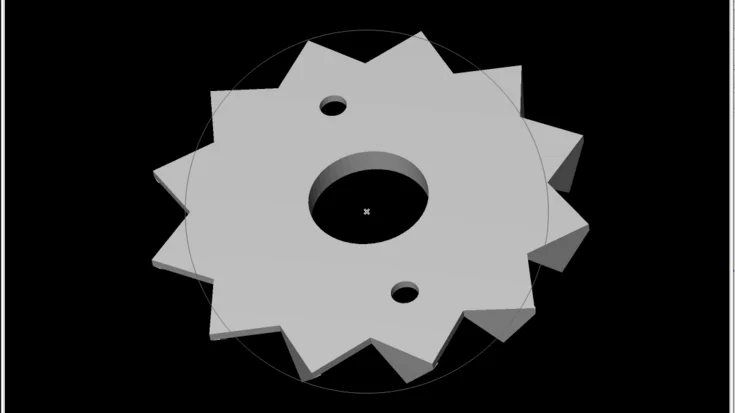
Improve your surface-based matching with two helpful features
Do you sometimes have objects, which have rather small symmetry-breaking elements (such as small boreholes on an object)? Does your surface-based 3D matching not find the correct orientation?
Read more
Developers Corner
Deep OCR Interface
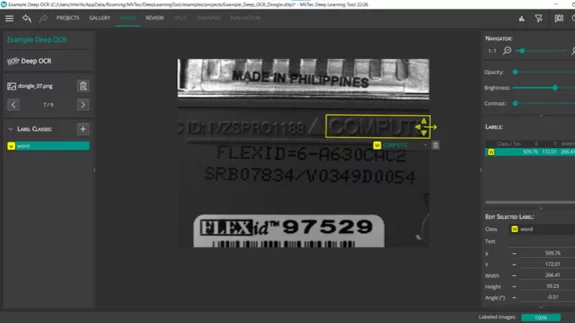
Deep OCR recognition training – the next level
HALCON’s Deep OCR is very powerful and can detect and recognize text in various industrial scenes. However, what if you have a special font, or want to read foreign characters? With HALCON 22.05 it is possible to train the recognition model to read s…
Read more
Developers Corner
Fitted primitives distance threshold
Metrology Model – Quality of Fit
"For most applications, the standard parameter values are sufficient." This sentence is often read in the HALCON Solution Guide. But what if the results do not meet your expectations? The Metrology Model allows lightning-fast measurement of geometric…
Read more
Developers Corner
Review of Acquisition Modes
This article gives an overview of HALCON’s image acquisition modes, explaining how continuous, triggered, and synchronous acquisition work, and clarifying common misconceptions for practical applications.
Read more
Developers Corner
Deep OCR – Tips and Tricks
Have you already experienced the performance boost by using Deep OCR compared to the classical rule‑based approaches? In this article, we’ll show you practical tips and tricks to further improve your Deep OCR results.
Read more
Developers Corner
Easy text and code reading with MERLIC standard tools
If you want to build an MVApp that reads for example QR codes or bar codes you can do so with just a few clicks. You can even combine the tools to get all available information printed on a product in different formats without the need for programmin…
Read more
Developers Corner
About MVTec's Heatmap
Imagine you intend to deliver a HALCON deep-learning-based classification application. And you are about to evaluate a trained model. You are therefore looking for feedback about this model, i.e. about its performances, biases, and other possible def…
Read more
Developers Corner
Gabor filter: What is it for?
Gabor filters, which are well known in the realm of time series analyses, can also be used in HALCON for 2D image analysis. They are particularly useful for detecting textures, patterns, and orientations in complex images.
Read more
Developers Corner
Introduction to new sub-pixel feature of bar code reader
Do you have small resolution bar codes to read but don't get any good results? Then please try our new feature – the subpixel bar code reader.
Read more
Developers Corner
Introduction to XYZ-Mappings (part 2)
This technical article continues our introduction to XYZ-mappings. In the last article, we answered the question "What are XYZ-mappings?" and gave a short preview towards "Why is using XYZ-mappings beneficial for many 3D applications?". Today, we wil…
Read more
Developers Corner
Introduction to XYZ-Mappings (part 1)
This technical article explores the benefits of XYZ-mappings in HALCON, showing how they increase speed, flexibility, and ease of use for many 3D applications.
Read more
Developers Corner
Deep learning: Why is the dataset key for a success result?
Deep learning success starts with the dataset: Learn why acquiring high-quality, well-labeled training data is crucial for reliable classification, detection, segmentation, and anomaly detection in your machine vision applications.
Read more
Developers Corner
How to prepare 3D height images for further processing with MERLIC’s standard tools
Learn how to prepare 3D height images in MERLIC for further processing: convert non-byte images to byte images to enable alignment, embossed text reading, and defect detection with standard easyTouch tools.
Read more
Developers Corner
Deflectrometry demo HALCON
Inspection of specular surfaces with deflectometry in HALCON
Inspect flat and curved reflective surfaces quickly and reliably with HALCON deflectometry: detect scratches, dents, and other defects with synchronized image acquisition and flexible image processing.
Read more
Developers Corner
Deep Learning classifier HALCON
Training a deep learning classifier with HALCON on the embedded board Jetson TX2
Learn how to train a deep learning classifier with HALCON on both a PC and an embedded Jetson TX2 board, from image acquisition to model training and inference, for efficient machine vision applications.
Read more
Developers Corner
Add touch input to the HSmartWindowControlWPF
Learn how to easily add touch input, including pinch-to-zoom, to the HSmartWindowControlWPF in HALCON, leveraging WPF’s built-in multi-touch events for intuitive image control.
Read more
Developers Corner
Increasing Speed in Deflectometry Set-ups
Discover three approaches to increase speed in deflectometry setups, from simple software-based synchronization to hardware triggers and FPGA-based real-time control, enabling faster and more precise inspection of reflective surfaces.
Read more
Developers Corner
HDevelop matching assistant speedup greediness
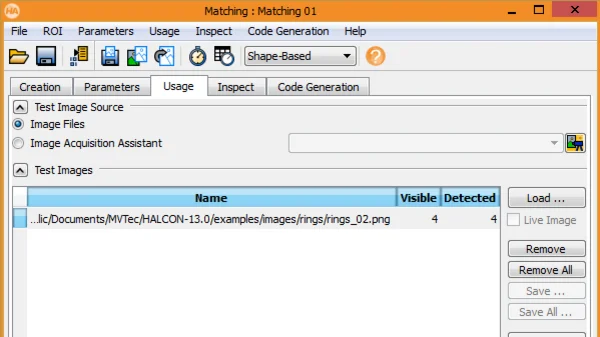
Speeding up shape-based matching with "Greediness"
Learn how the 'Greediness' parameter in shape-based matching balances speed and detection completeness, enabling faster searches while maintaining robust results in HALCON.
Read more
Developers Corner
Best practice for classification and OCR
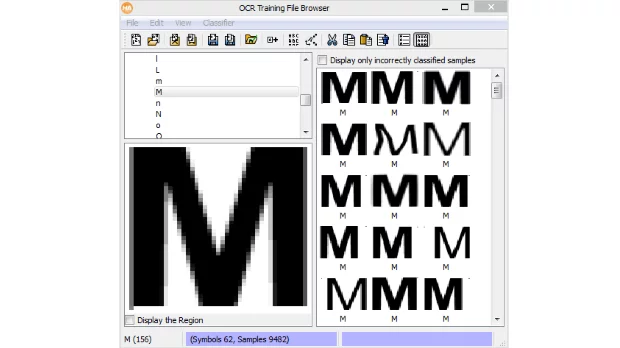
Discover best practices for setting up classification and OCR in HALCON using the HDevelop OCR Training File Browser – quickly review, correct, and optimize your training data to improve segmentation and classification results.
Read more
Developers Corner
Rejection all classes 1.5
How to use rejection classes in MVTec HALCON
Learn how to handle outlier samples in MVTec HALCON by using rejection classes in MLP classifiers – automatically generate samples outside the training classes to improve classification reliability.
Read more
Developers Corner
MVTec Software