Developers Corner

Speed up your Image Classification

Discover how to significantly speed up image classification in HALCON using look-up tables (LUTs), enabling faster online inspection while understanding the trade-offs between speed and accuracy.

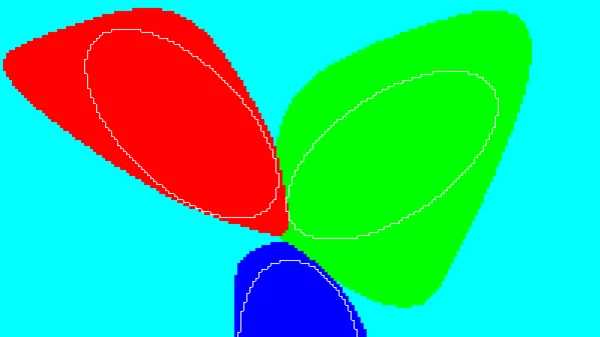
Classification is a very important method, often used in image processing. It can be utilized for directly segmenting an image into known classes, i.e., pixels are classified and grouped into regions, which can then be processed further. Important use cases are texture segmentation and, of course, color classification.

Especially for such tasks, HALCON provides a method to significantly speed up your classification. You may already know this method from color transformation, or have heard its name in connection with visualization: The look-up table, or “LUT” for short.

For all image classifiers in HALCON, i.e., GMM, KNN, MLP, or SVM, the LUT functionality is available. To use it, create_class_lut_* has to be called after training a classifier with create_class_* and train_class_*. Then, use classify_image_class_lut instead of classify_image_class_*.

Now, every possible response of the classifier is stored in a LUT and calculating the class of every image point online is no longer necessary. Creating a LUT can be done offline. Hence, you benefit from faster processing during online inspection. However, a significant speedup sometimes comes at a price: When using a LUT, the accuracy of the classification results may be lower than when classifying from scratch.

The LUT can only be 3-dimensional at most. Therefore, NumComponents in operators create_class_* can have a maximum value of 3. That means, you can use up to 3 channels in the input image, or restrict the number of components to 3 by setting Preprocessing to appropriate values.

The HDevelop standard example classify_image_class_lut.hdev demonstrates the usage of a LUT for classifiers available in HALCON. The sample also shows the impact on runtime when using a LUT. You can find the example in: %HALCONEXAMPLES%\hdevelop\Segmentation\Classification\classify_image_class_lut.hdev
Further articles

Visualize Object Model 3D
Improve your surface-based matching with two helpful features
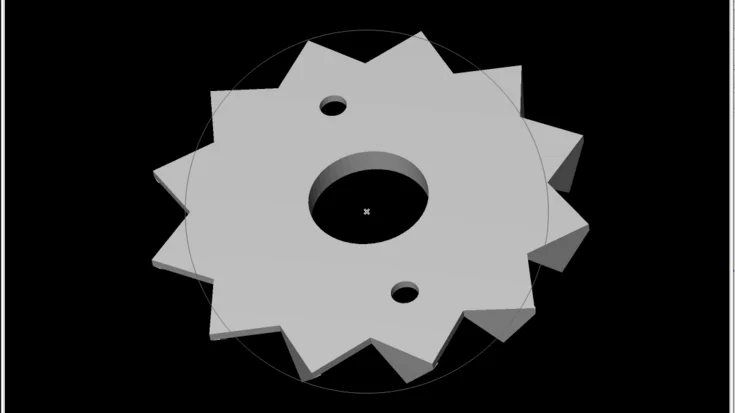
Do you sometimes have objects, which have rather small symmetry-breaking elements (such as small boreholes on an object)? Does your surface-based 3D matching not find the correct orientation?
Read more
Developers Corner
Deep OCR Interface
Deep OCR recognition training – the next level
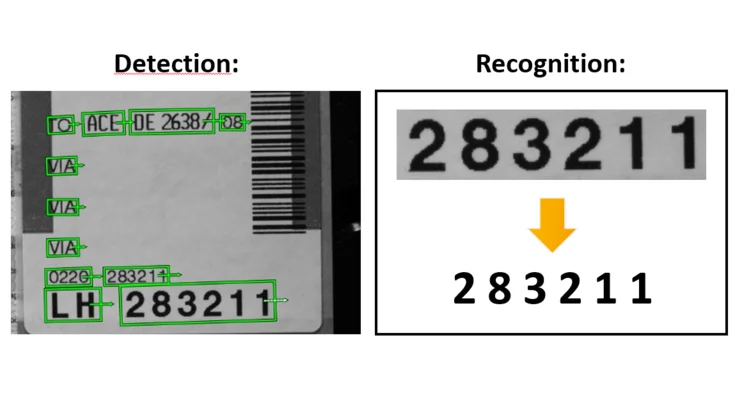
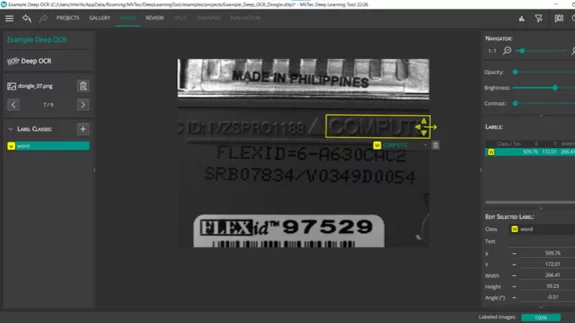
HALCON’s Deep OCR is very powerful and can detect and recognize text in various industrial scenes. However, what if you have a special font, or want to read foreign characters? With HALCON 22.05 it is possible to train the recognition model to read s…
Read more
Developers Corner
Fitted primitives distance threshold
Metrology Model – Quality of Fit
"For most applications, the standard parameter values are sufficient." This sentence is often read in the HALCON Solution Guide. But what if the results do not meet your expectations? The Metrology Model allows lightning-fast measurement of geometric…
Read more
Developers Corner
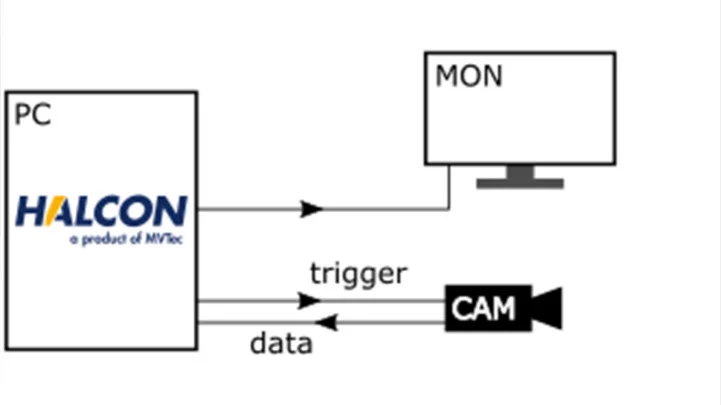
Review of Acquisition Modes
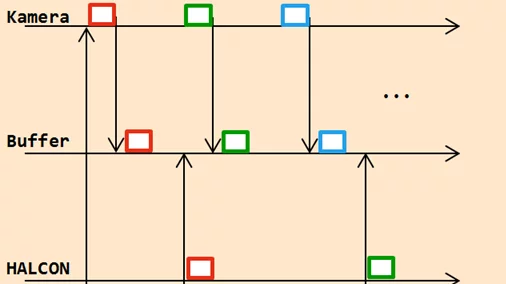
This article gives an overview of HALCON’s image acquisition modes, explaining how continuous, triggered, and synchronous acquisition work, and clarifying common misconceptions for practical applications.
Read more
Developers Corner
Deep OCR – Tips and Tricks
Have you already experienced the performance boost by using Deep OCR compared to the classical rule‑based approaches? In this article, we’ll show you practical tips and tricks to further improve your Deep OCR results.
Read more
Developers Corner
Easy text and code reading with MERLIC standard tools
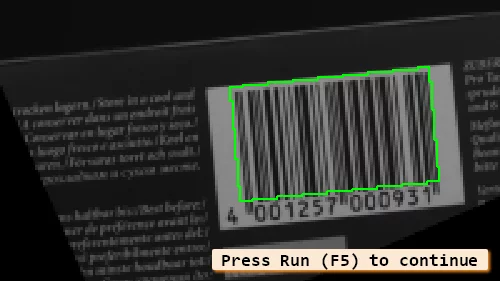
If you want to build an MVApp that reads for example QR codes or bar codes you can do so with just a few clicks. You can even combine the tools to get all available information printed on a product in different formats without the need for programmin…
Read more
Developers Corner
About MVTec's Heatmap
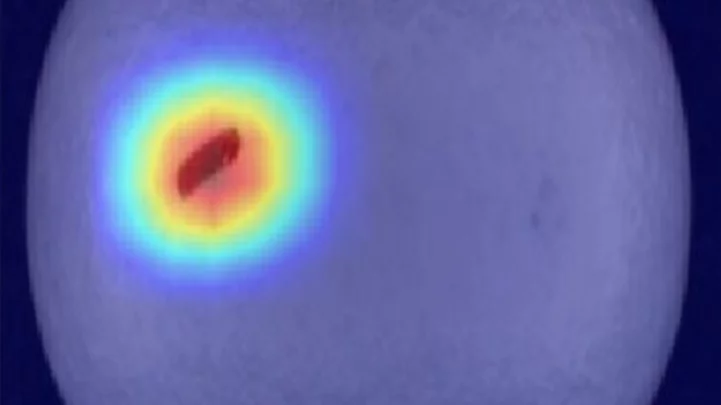
Imagine you intend to deliver a HALCON deep-learning-based classification application. And you are about to evaluate a trained model. You are therefore looking for feedback about this model, i.e. about its performances, biases, and other possible def…
Read more
Developers Corner
Gabor filter: What is it for?
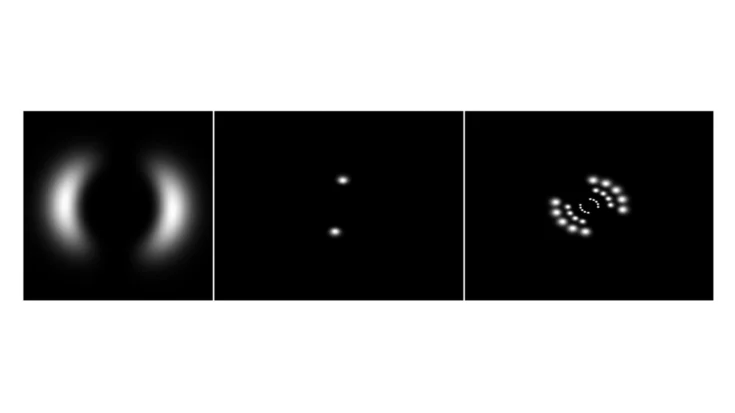
Gabor filters, which are well known in the realm of time series analyses, can also be used in HALCON for 2D image analysis. They are particularly useful for detecting textures, patterns, and orientations in complex images.
Read more
Developers Corner
Introduction to new sub-pixel feature of bar code reader
Do you have small resolution bar codes to read but don't get any good results? Then please try our new feature – the subpixel bar code reader.
Read more
Developers Corner
Introduction to XYZ-Mappings (part 2)
This technical article continues our introduction to XYZ-mappings. In the last article, we answered the question "What are XYZ-mappings?" and gave a short preview towards "Why is using XYZ-mappings beneficial for many 3D applications?". Today, we wil…
Read more
Developers Corner
Introduction to XYZ-Mappings (part 1)
This technical article explores the benefits of XYZ-mappings in HALCON, showing how they increase speed, flexibility, and ease of use for many 3D applications.
Read more
Developers Corner
Deep learning: Why is the dataset key for a success result?
Deep learning success starts with the dataset: Learn why acquiring high-quality, well-labeled training data is crucial for reliable classification, detection, segmentation, and anomaly detection in your machine vision applications.
Read more
Developers Corner
How to prepare 3D height images for further processing with MERLIC’s standard tools
Learn how to prepare 3D height images in MERLIC for further processing: convert non-byte images to byte images to enable alignment, embossed text reading, and defect detection with standard easyTouch tools.
Read more
Developers Corner
Deflectrometry demo HALCON
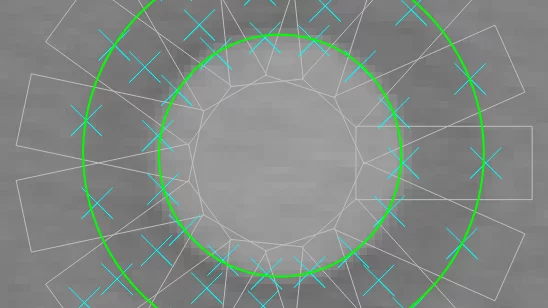
Inspection of specular surfaces with deflectometry in HALCON
Inspect flat and curved reflective surfaces quickly and reliably with HALCON deflectometry: detect scratches, dents, and other defects with synchronized image acquisition and flexible image processing.
Read more
Developers Corner
Deep Learning classifier HALCON
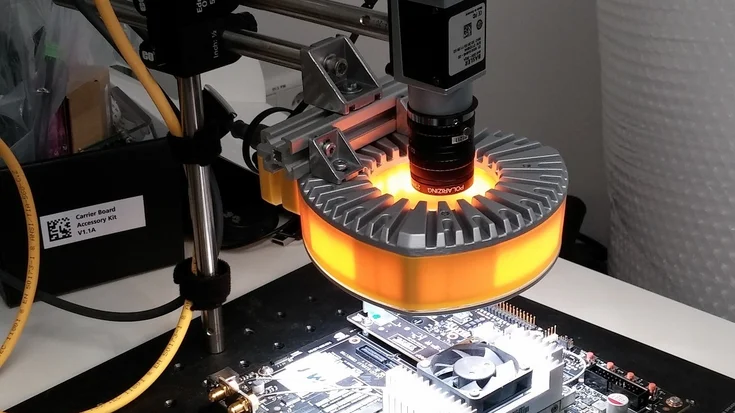
Training a deep learning classifier with HALCON on the embedded board Jetson TX2
Learn how to train a deep learning classifier with HALCON on both a PC and an embedded Jetson TX2 board, from image acquisition to model training and inference, for efficient machine vision applications.
Read more
Developers Corner
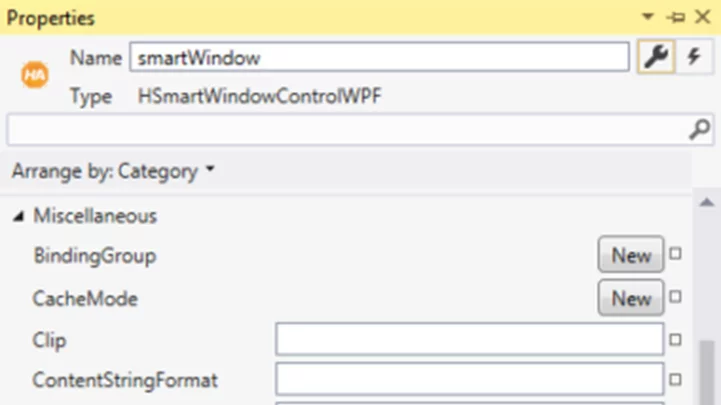
Add touch input to the HSmartWindowControlWPF
Learn how to easily add touch input, including pinch-to-zoom, to the HSmartWindowControlWPF in HALCON, leveraging WPF’s built-in multi-touch events for intuitive image control.
Read more
Developers Corner
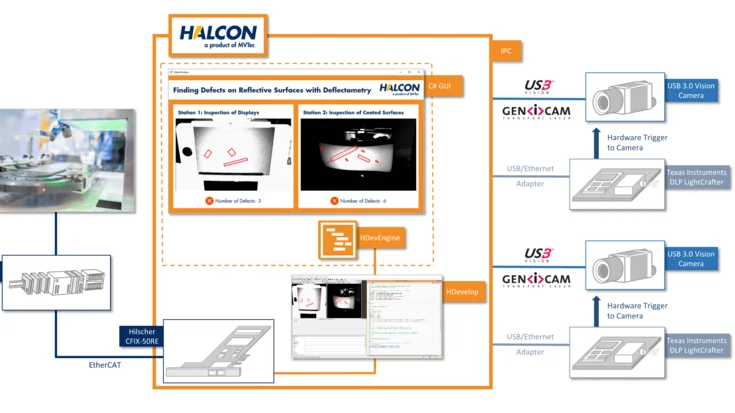
Increasing Speed in Deflectometry Set-ups
Discover three approaches to increase speed in deflectometry setups, from simple software-based synchronization to hardware triggers and FPGA-based real-time control, enabling faster and more precise inspection of reflective surfaces.
Read more
Developers Corner
HDevelop matching assistant speedup greediness
Speeding up shape-based matching with "Greediness"
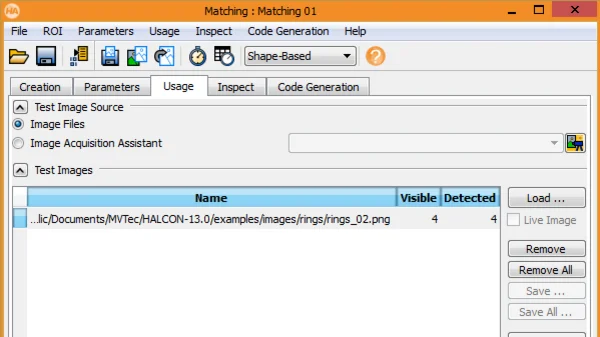
Learn how the 'Greediness' parameter in shape-based matching balances speed and detection completeness, enabling faster searches while maintaining robust results in HALCON.
Read more
Developers Corner
Best practice for classification and OCR
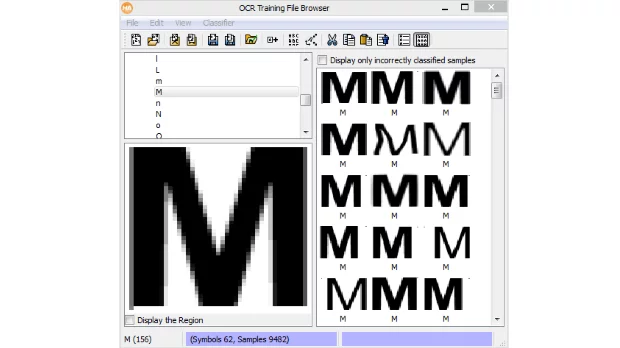
Discover best practices for setting up classification and OCR in HALCON using the HDevelop OCR Training File Browser – quickly review, correct, and optimize your training data to improve segmentation and classification results.
Read more
Developers Corner
Rejection all classes 1.5
How to use rejection classes in MVTec HALCON
Learn how to handle outlier samples in MVTec HALCON by using rejection classes in MLP classifiers – automatically generate samples outside the training classes to improve classification reliability.
Read more
Developers Corner
MVTec Software