MVTEC HALCON
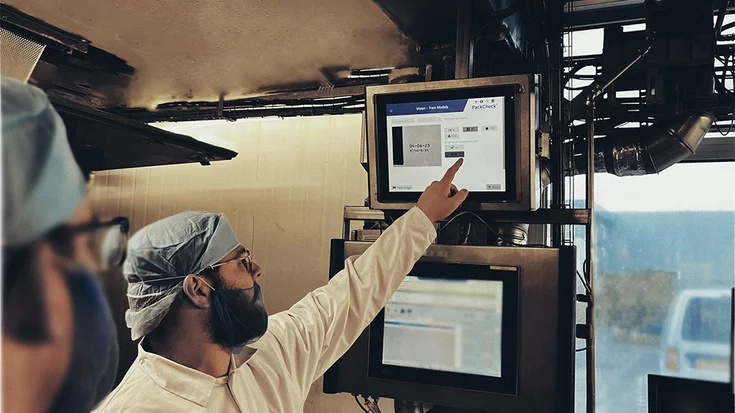
In order picking, one factor is decisive: accuracy. However, the concentration of operating staff can decrease after several hours. The result is complaints and incorrect shipments. To prevent this, an image recognition system supports the operating staff. It identifies the component and responds accordingly or guides the operating staff via a monitor.
One of the major trend topics in the automotive and logistics industries, and at the same time one of the biggest challenges in the automotive sector, is complexity in JIS logistics (Just-in-Sequence). In particular, the automotive industry is driving this complexity through continuous innovations, cost reductions, individualized vehicle configurations, and small batch sizes. The response consists of flexible logistics concepts, database structures, and modern sensor technology. Intelligent machine vision systems demonstrate their strengths especially in JIS order picking in the automotive industry. For several years, Just-in-Time (JIT) deliveries have been required to provide all necessary components and parts at the respective assembly station without warehousing, synchronized with processes, demand-driven, and precisely timed. Developments in automotive production now require not only precise timing but also precise sequencing of assemblies, such as specific seats, door panels, or headliners.
For logistics service providers, the challenges of warehouse-free production lie in high-frequency direct deliveries to manufacturing companies and the very tight time windows involved. This type of sequence-accurate delivery requires systems that can reliably capture the current status of each process chain at any time. The customer-specific production of vehicles such as the Opel Adam or Audi A1, for example, requires that individually configured modules – including custom-painted exterior mirrors, grille trims, or exterior decorations – are assembled at a precisely defined production time.
Today, logistics companies and service providers use systems based on barcode or RFID chip identification for order picking and delivery. In conventional warehousing, every component and every storage location is labeled with an individual barcode. When an order picker receives an order to prepare components for shipment, they typically see the article number and the corresponding storage location on a handheld device. By confirming the barcode scan, the system ensures that the operating staff has removed the correct component from the correct storage bin. An additional scan on the load carrier then confirms the correct position.
This approach – guiding personnel via barcodes – involves avoidable issues. If order pickers follow only numeric codes or barcodes, a logical plausibility check by the operating staff is not ensured. In addition, not only job satisfaction but also process quality suffers. Despite close system guidance, the repetitive work requires high concentration and therefore repeatedly leads to errors.
The problem: For logistics service providers, these errors are hardly traceable or not traceable at all. Only at the end of the process does the plant report a missing or incorrect component.
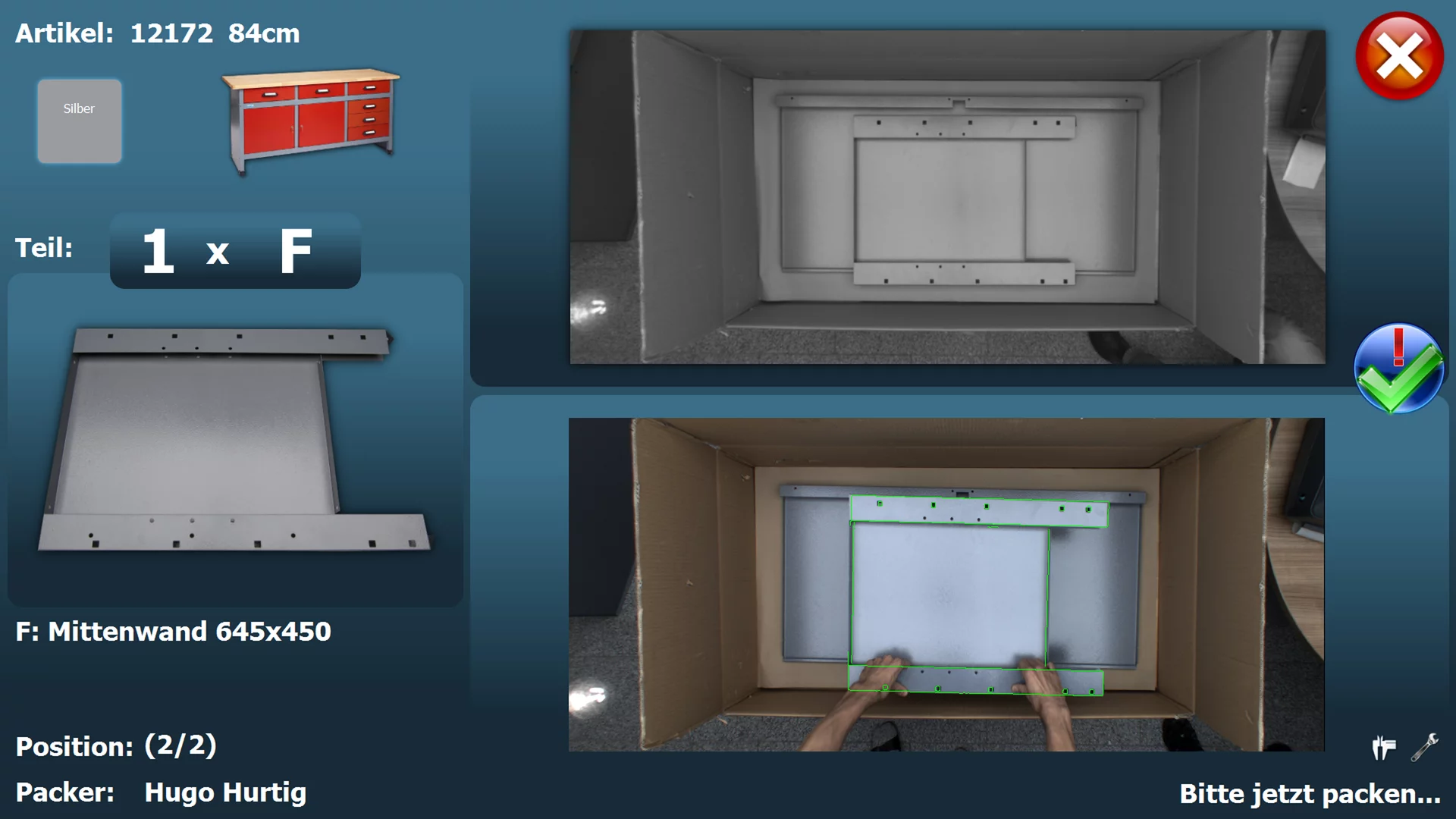
Image recognition systems such as the “Schlaue Klaus” from Optimum address exactly this problem. With intelligent software solutions, logistics providers and automotive manufacturers can increase product and process quality. Systems such as the “Schlaue Klaus” provide operating staff in order picking with a monitor that shows which component must be taken from which storage bin. The advantages are clear: work becomes more relaxed and transparent, and job satisfaction increases. The reasons are simple. The human brain processes information in images. Letters or entire words must first be converted into images in the human mind – with numbers or combinations of numbers, this process is even more demanding. A camera-based machine vision system supports operating staff and provides visual, positive feedback when tasks are performed correctly. If an error occurs, the “Schlaue Klaus” immediately alerts the operating staff and indicates how to correct it. Another major advantage is the complete and visual documentation of the work performed. If production errors occur, a fault on the part of the logistics provider can be clearly ruled out if necessary.
Current situation: Task complexity in logistics continues to increase. At the same time, employee performance decreases. Temporary staff require long training periods, and high workload leads more frequently to fatigue and absences.
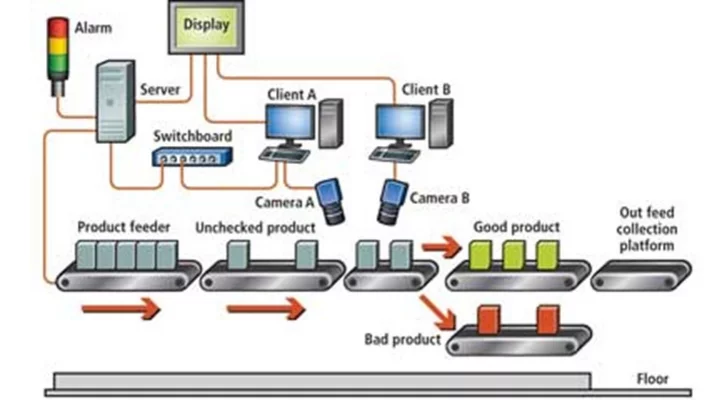
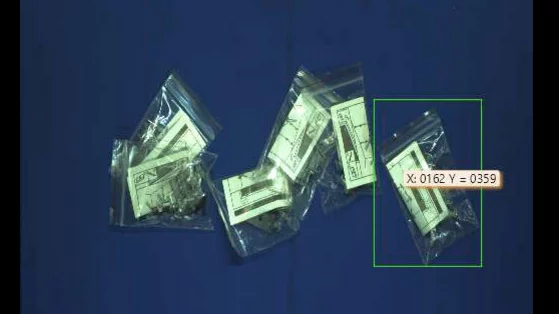
Solution: The “Schlaue Klaus” is based on an event-driven, optical, fully automated machine vision system. It detects the component and the event and reacts accordingly or guides the operating staff step by step. The next task is displayed on the monitor and correct execution is verified. If everything is performed correctly, operating staff receive visual confirmation and the next step is displayed. The “Schlaue Klaus” also recognizes very similar components and products based on features such as shape, color, contours, and printed characters, which are stored in the integrated database during training. Neither rotation nor position presents a problem. Barcodes can also be read quickly. The system is therefore ideally suited for use in production, manufacturing, goods-in, and goods-out. It can be easily integrated into existing processes as inline inspection. No specific expertise is required to train new products. Temporary or unskilled staff can carry this out easily. Thanks to its capabilities to identify, measure, count, and inspect parts, the system is ideally suited for quality control. Complaints that damage reputation and result in customer loss and follow-up costs can be almost completely avoided.
Author: Wolfgang Mahanty
“We have come to know HALCON as a very high-performance system that provides strong support for many projects. Several challenges can be implemented almost in real time. This repeatedly inspires our customers.”
(Wolfgang Mahanty, Managing Director of Optimum datamanagement solutions GmbH, Karlsruhe)
We thank the trade journal messtec drives Automation for providing this article. All product names are trademarks, and product images and brands are subject to the copyright of their respective owners. All rights reserved.
Published on: October 21, 2025