Success Story

Machine vision accelerates battery production

High speed, precision, and reliability: These are the determining factors for battery production. To meet the rapidly growing demand for batteries, companies are developing increasingly efficient production processes. Laserax has developed a new system in which the laser welding of battery cells is significantly accelerated using the standard machine vision software MVTec HALCON.
HALCON
Battery Production
3D Calibration
Calibration
Matching

With the “Battery Welding Machine”, Laserax from Quebec, Canada, has developed a system that significantly accelerates the automated robot-based welding of the current collector and busbar to the battery module. The company, founded in 2010, has developed an efficient welding solution for a critical production step in battery manufacturing. Thanks to the µm-precise robot guidance provided by the integrated machine vision software MVTec HALCON, battery modules can now be produced significantly faster and with less waste. The solution is suitable for the production of batteries for the automotive industry, automated guided vehicles (AGV) in logistics, e-bikes, and power tools. “We are in close contact with our customers from the battery industry. We have realized that they are specifically looking for a solution to weld the current collector and the busbar to the battery module. Although there were already other methods for connecting, these could not offer the necessary speed and quality. That’s why we developed our own system for this process, based on laser welding,” says Keven Tremblay, Product Line Manager at Laserax.

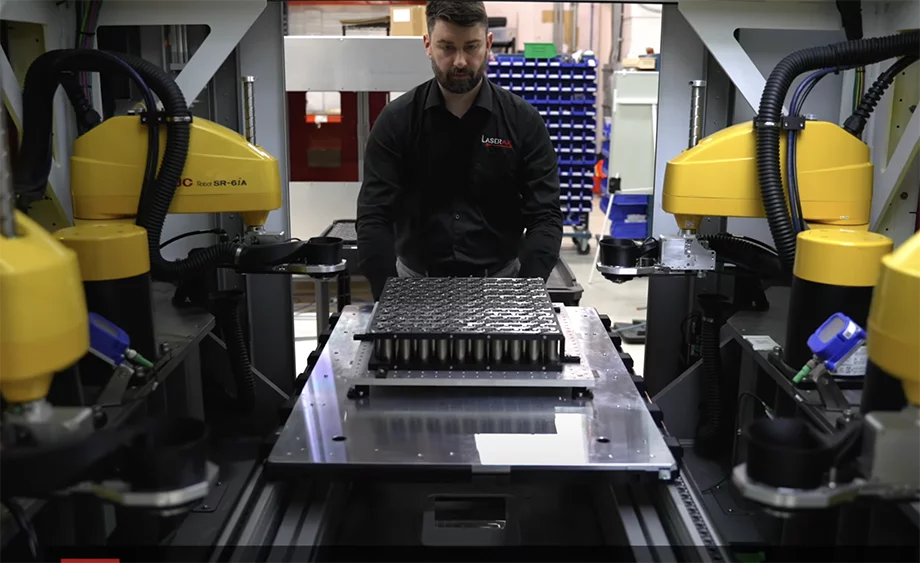
The result is the so-called ‘Battery Welding Machine’, in which four SCARA robots successively clamp the contacts of battery modules and connect them using a laser welding process at a very high speed and with little waste. This new process is made possible by Laserax's ingenious engineering and machine vision. The utilized machine vision software MVTec HALCON can localize the cells of the battery module with micron precision, enabling the robots to perform the clamping and laser welding work with absolute precision.

The challenge for the system: high speed, precision, and 100 percent objective

There are three main challenges in the complex processes of battery production: First, the processes must be very fast. Second, quality must not suffer as a result, so that the battery achieves the desired performance and longevity. Third, the traceability of components and production steps is very important.

Until now, established methods such as ultrasonic bonding or welding methods such as spot or resistance welding were used to connect the current collectors and busbars to the battery module. Laser welding has numerous advantages over these methods: among other things, it is highly accurate, even when connecting the smallest components, and produces minimal distortion as the heat input is low. “We knew that the entire system, including the laser welding and the fast, adaptable clamping had to be considered as a single system. We rely on the machine vision software MVTec HALCON for precise and fast operation,” says Keven Tremblay.
Four robots optimize welding of the current collector to the module

At the beginning of the workflow, a module is delivered to the system and fed into the “Battery Welding Machine” through an opening on the side. There are four robots that carry out the busbar clamping and one gantry-mounted laser head with larger field of view to perform the laser welding. Two cameras are mounted on the side of the laser scan head to allow 3D stereoscopic vision. In the first step, the two cameras take high-resolution images of the battery module on a 400 x 400 mm area from above. The machine vision software HALCON then calculates the X-Y-Z positions of all the cells by merging the images from the two cameras. The coordinates determined in this way are transmitted to the clamping robots and the laser system. The precise position of each spot to be welded on the battery cells is found and determined with very high accuracy. This is not as easy as it seems, as Keven Tremblay explains: “The workspace of 400 x 400 mm is quite large. Determining the individual positions in the µm range is technologically extremely challenging.”

The robots clamp the current collectors onto the battery cells, while the laser welds the clamped components one after the other. The machine works with four robots to maximize the operating time of the laser. Weld quality monitoring is performed during the welding process using a specially designed sensor.

Laser welding based on machine vision: more energy for battery production

“The ‘Battery Welding Machine’ is now being used by our customers. The feedback we have received has been consistently positive. Above all, our customers appreciate the fact that they can now produce much faster and maintain quality and versatility. This means that our solution has hit the nail on the head,” says Keven Tremblay at Laserax.
Further articles

Visualize Object Model 3D
Improve your surface-based matching with two helpful features
Do you sometimes have objects, which have rather small symmetry-breaking elements (such as small boreholes on an object)? Does your surface-based 3D matching not find the correct orientation?
Read more
Developers Corner
Deep OCR Interface
Deep OCR recognition training – the next level
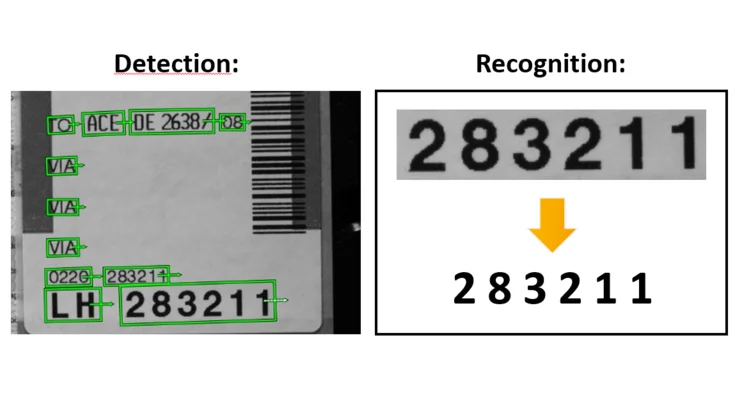
HALCON’s Deep OCR is very powerful and can detect and recognize text in various industrial scenes. However, what if you have a special font, or want to read foreign characters? With HALCON 22.05 it is possible to train the recognition model to read s…
Read more
Developers Corner
Fitted primitives distance threshold
Metrology Model – Quality of Fit
"For most applications, the standard parameter values are sufficient." This sentence is often read in the HALCON Solution Guide. But what if the results do not meet your expectations? The Metrology Model allows lightning-fast measurement of geometric…
Read more
Developers Corner
Review of Acquisition Modes
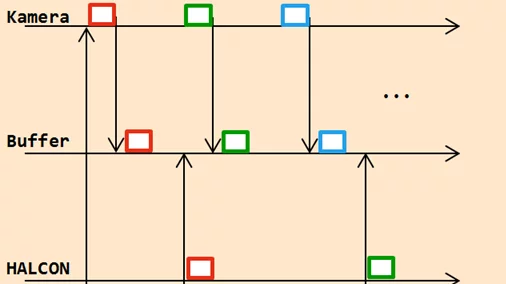
This article gives an overview of HALCON’s image acquisition modes, explaining how continuous, triggered, and synchronous acquisition work, and clarifying common misconceptions for practical applications.
Read more
Developers Corner
Deep OCR – Tips and Tricks
Have you already experienced the performance boost by using Deep OCR compared to the classical rule‑based approaches? In this article, we’ll show you practical tips and tricks to further improve your Deep OCR results.
Read more
Developers Corner
Easy text and code reading with MERLIC standard tools
If you want to build an MVApp that reads for example QR codes or bar codes you can do so with just a few clicks. You can even combine the tools to get all available information printed on a product in different formats without the need for programmin…
Read more
Developers Corner
About MVTec's Heatmap
Imagine you intend to deliver a HALCON deep-learning-based classification application. And you are about to evaluate a trained model. You are therefore looking for feedback about this model, i.e. about its performances, biases, and other possible def…
Read more
Developers Corner
Gabor filter: What is it for?
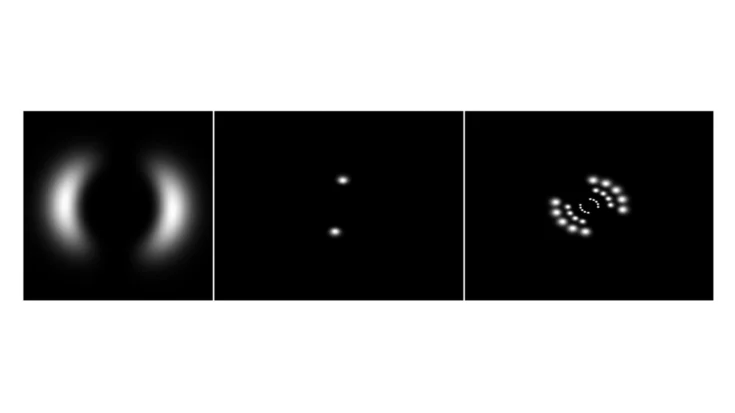
Gabor filters, which are well known in the realm of time series analyses, can also be used in HALCON for 2D image analysis. They are particularly useful for detecting textures, patterns, and orientations in complex images.
Read more
Developers Corner
Introduction to new sub-pixel feature of bar code reader
Do you have small resolution bar codes to read but don't get any good results? Then please try our new feature – the subpixel bar code reader.
Read more
Developers Corner
Introduction to XYZ-Mappings (part 2)
This technical article continues our introduction to XYZ-mappings. In the last article, we answered the question "What are XYZ-mappings?" and gave a short preview towards "Why is using XYZ-mappings beneficial for many 3D applications?". Today, we wil…
Read more
Developers Corner
Introduction to XYZ-Mappings (part 1)
This technical article explores the benefits of XYZ-mappings in HALCON, showing how they increase speed, flexibility, and ease of use for many 3D applications.
Read more
Developers Corner
Deep learning: Why is the dataset key for a success result?
Deep learning success starts with the dataset: Learn why acquiring high-quality, well-labeled training data is crucial for reliable classification, detection, segmentation, and anomaly detection in your machine vision applications.
Read more
Developers Corner
How to prepare 3D height images for further processing with MERLIC’s standard tools
Learn how to prepare 3D height images in MERLIC for further processing: convert non-byte images to byte images to enable alignment, embossed text reading, and defect detection with standard easyTouch tools.
Read more
Developers Corner
Deflectrometry demo HALCON
Inspection of specular surfaces with deflectometry in HALCON
Inspect flat and curved reflective surfaces quickly and reliably with HALCON deflectometry: detect scratches, dents, and other defects with synchronized image acquisition and flexible image processing.
Read more
Developers Corner
Deep Learning classifier HALCON
Training a deep learning classifier with HALCON on the embedded board Jetson TX2
Learn how to train a deep learning classifier with HALCON on both a PC and an embedded Jetson TX2 board, from image acquisition to model training and inference, for efficient machine vision applications.
Read more
Developers Corner
Add touch input to the HSmartWindowControlWPF
Learn how to easily add touch input, including pinch-to-zoom, to the HSmartWindowControlWPF in HALCON, leveraging WPF’s built-in multi-touch events for intuitive image control.
Read more
Developers Corner
Increasing Speed in Deflectometry Set-ups
Discover three approaches to increase speed in deflectometry setups, from simple software-based synchronization to hardware triggers and FPGA-based real-time control, enabling faster and more precise inspection of reflective surfaces.
Read more
Developers Corner
HDevelop matching assistant speedup greediness
Speeding up shape-based matching with "Greediness"
Learn how the 'Greediness' parameter in shape-based matching balances speed and detection completeness, enabling faster searches while maintaining robust results in HALCON.
Read more
Developers Corner
Best practice for classification and OCR
Discover best practices for setting up classification and OCR in HALCON using the HDevelop OCR Training File Browser – quickly review, correct, and optimize your training data to improve segmentation and classification results.
Read more
Developers Corner
Rejection all classes 1.5
How to use rejection classes in MVTec HALCON
Learn how to handle outlier samples in MVTec HALCON by using rejection classes in MLP classifiers – automatically generate samples outside the training classes to improve classification reliability.
Read more
Developers Corner
MVTec Software