Computational imaging
Computational imaging provides possibilities to obtain good image quality without complicated conventional lighting or optical conditions. Processed with computational imaging techniques, a sequence of images taken under different lighting or optical conditions can achieve output with enhanced quality and image feature extractions that your machine vision algorithm needs in real time. This can help you implement more robust machine vision applications with less development time and cost.
Such computational imaging functionalities are also included in the HALCON Toolbox, e.g. hyperspectral imaging (HSI), high dynamic range imaging (HDR) and photometric stereo (PMS).
Hyperspectral imaging (HSI)
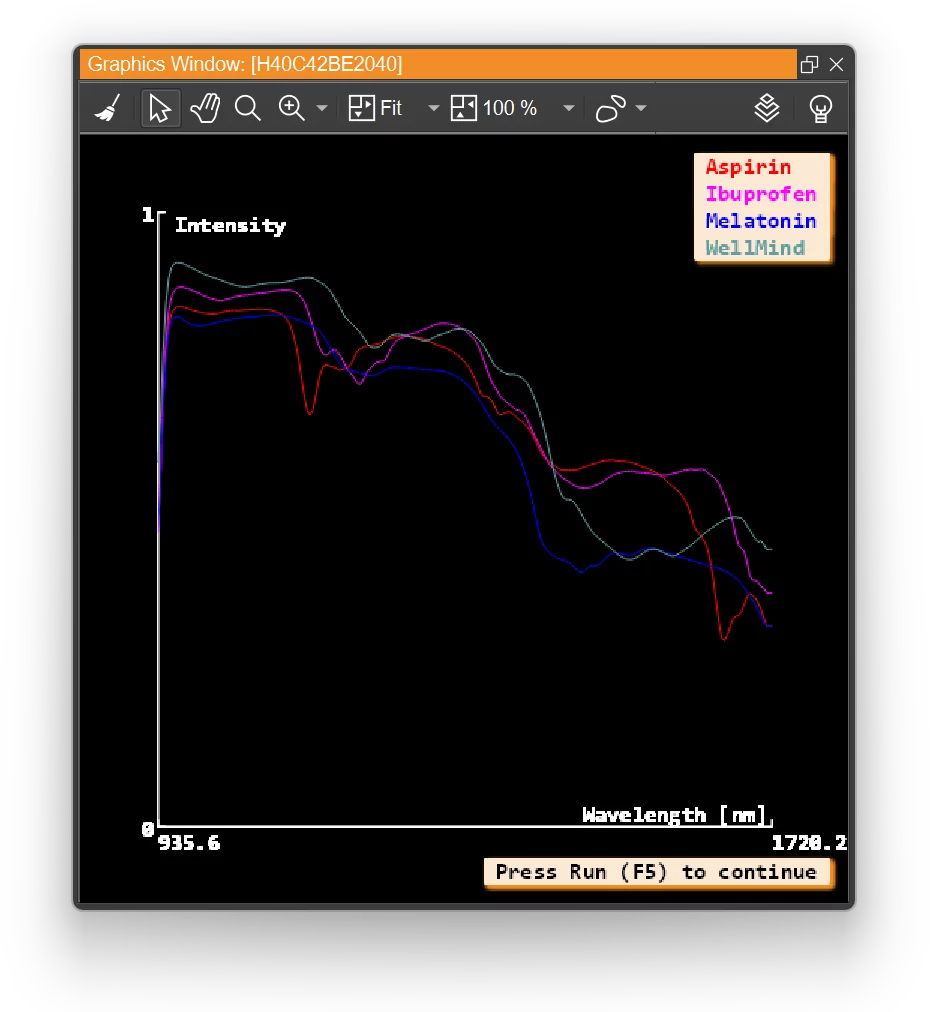
Hyperspectral imaging enables the analysis of materials based on their spectral signatures. Unlike traditional image processing systems with RGB or grayscale cameras, a hyperspectral camera provides a complete spectrum for each individual pixel across dozens to hundreds of closely spaced wavelengths. This reveals differences that are invisible to the naked eye, such as between chemically different but optically identical objects.
Hyperspectral image processing with MVTec HALCON
With HALCON, you can use hyperspectral data for demanding tasks such as classification, material identification, and quality control in industrial image processing.
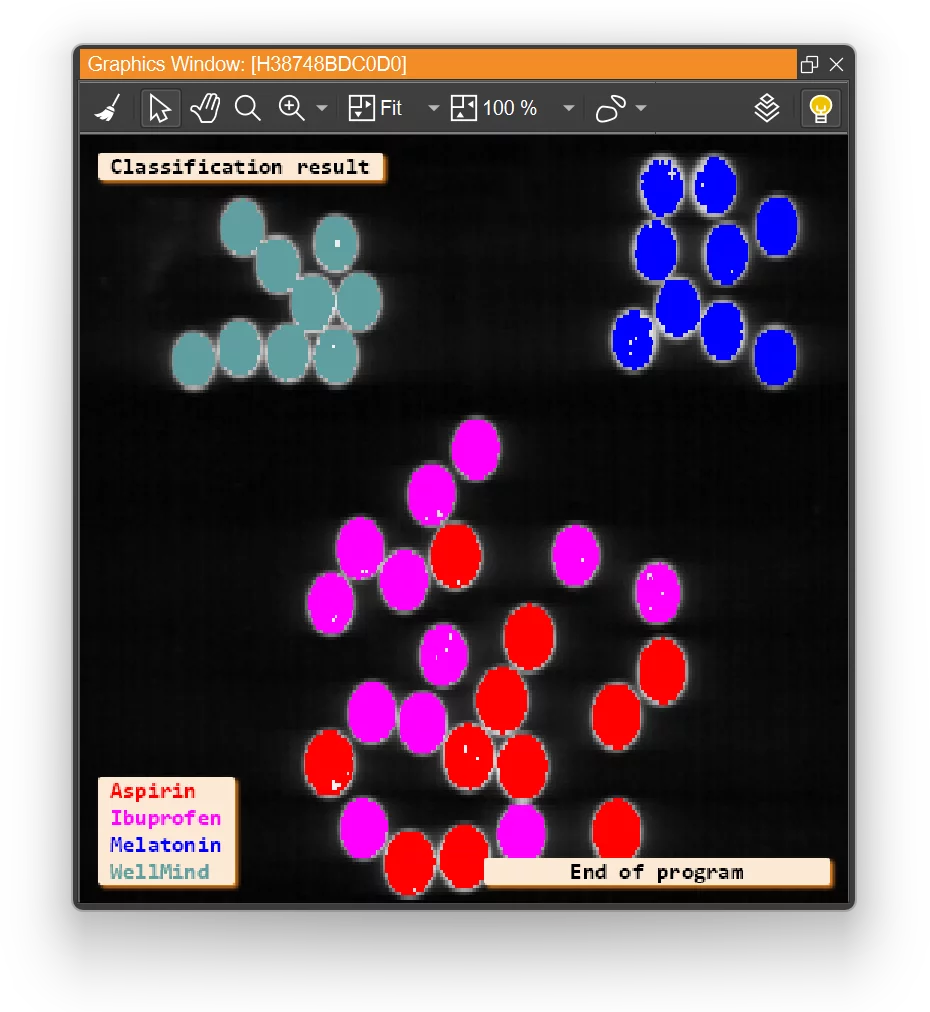
HALCON offers a variety of ready-to-use sample programs. The sample program “Classify different pills based on hyperspectral images” shows a complete pipeline for spectral classification for distinguishing between pills that are optically identical but chemically different:
- Import hyperspectral data in the widely used ENVI file format or from GigE Vision-compatible hyperspectral cameras.
- Reorganization of the data structure: from BIL (Band Interleaved by Line) to an image-based format.
- Reflection transformation to obtain the actual intensity values. In addition to the actual data, dark and white reference data must also be available.
- Classification in HALCON based on the emitted spectra.
The sample program “Classify different pills based on hyperspectral images” in HALCON shows how hyperspectral data can be processed efficiently.
Supported hardware: GigE Vision-compatible hyperspectral cameras
The example is based on data captured with GigE Vision-compatible hyperspectral cameras such as the FX series from our technology partner Specim. Alternatively, offline stored ENVI datasets can be used.
Application example: Classification of visually identical objects
A typical application scenario is the differentiation of externally identical pharmaceuticals, e.g., for the detection of counterfeit products, for sorting different medications in production lines, or for differentiating between brand-name drugs and generics. Although tablets have the same shape and color, they can be reliably classified based on their infrared spectra — for example, according to active ingredient or composition. HALCON enables the seamless integration of such processes into industrial applications.
High dynamic range imaging (HDR)
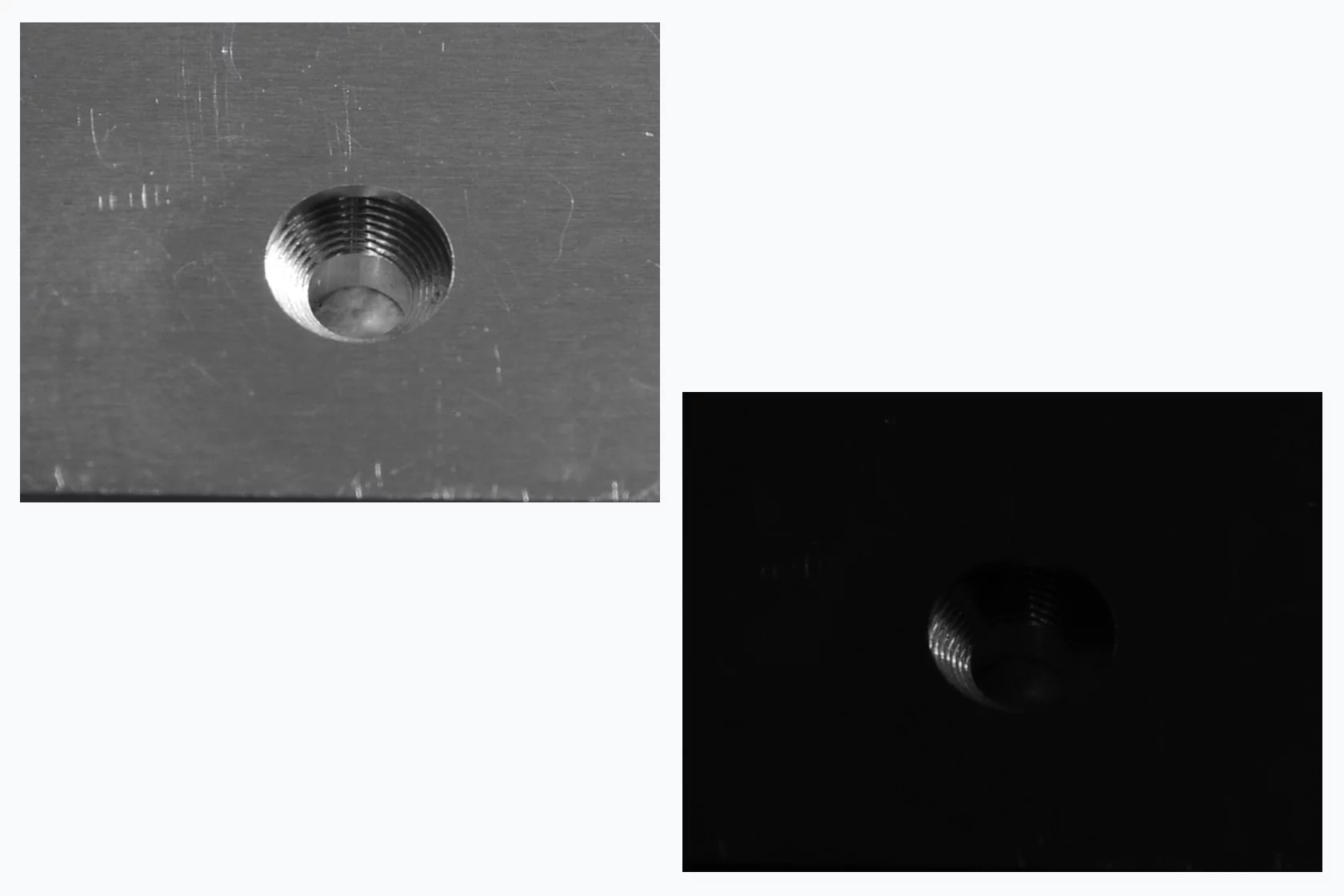
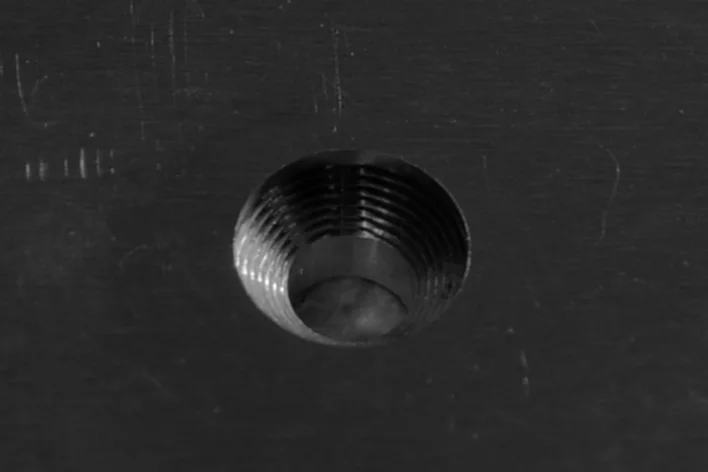
With high dynamic range imaging (HDR), extremes in contrast can be removed from images produced using different illumination levels. For example, this borehole is captured under short and long light pulse. HDR combined these source images to form a more evenly lit image with both details on the brightest and darkest part. Typically, use cases like defect inspection and, quality control in general benefit from this technique.
Photometric stereo (PMS)
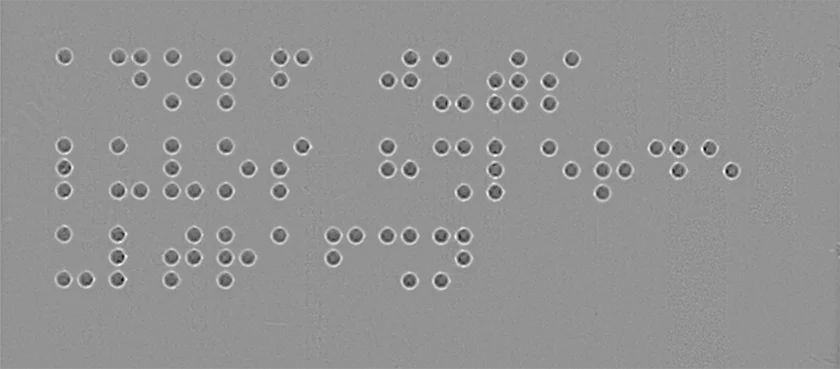
Photometric stereo (PMS) is a technique used to generate edge and texture of an object from its 2D texture or surface coloring. Generally, you need to take images of the object that are sequentially illuminated from multiple different directions like the pharmaceutical package shown left. Then a computed shape image with complete and clear braille characters can be generated using photometric stereo algorithms. This resulting image can be further processed for other machine vision applications such as OCR and object segmentation. Typical applications of photometric stereo are detecting small inconsistencies in a surface that represent, e.g. defects, eliminating the impact of the direction of light on the images that are used, e.g., for the print inspection of non flat characters.